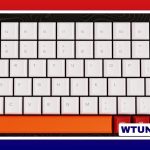
The Razer BlackWidow 75 is designed for people who want a smaller keyboard without giving up the keys that make everyday work and gaming convenient. Its 75 percent layout retains the arrow keys and a useful navigation cluster while removing much of the unused space found on a full-size keyboard. The result is a compact board that leaves more room for a mouse, accessories, or a smaller desk setup. For details about its lineage, compare the Black Widow keyboards within popular keyboard brands and models.
What the 75 percent layout offers
A 75 percent keyboard sits between a 60 percent model and a tenkeyless or full-size board. It generally keeps the function row, arrow keys, and several navigation keys, but drops the number pad and reduces the gaps between sections.
That arrangement suits users who regularly switch between games, documents, and shortcuts. The arrow keys remain easy to reach, while the smaller footprint can make it more comfortable to position a mouse closer to the keyboard. Buyers who frequently enter numbers may still prefer a separate numpad or a larger keyboard.
Switch choices and typing feel
Switch selection has a major effect on how the BlackWidow feels and sounds. Razer’s keyboard range has included several switch types, including the following:
- Linear switches: Smooth key travel with no tactile bump, often preferred for rapid and consistent presses.
- Tactile switches: A noticeable bump provides feedback without the pronounced click of a clicky switch.
- Clicky switches: A sharper tactile response and audible click for users who enjoy a more distinctive typing experience.
Names such as Razer Yellow, Razer Orange, and Razer Green have been associated with these different characteristics, but the exact switch supplied depends on the specific keyboard version. Sound, actuation feel, and resistance can vary, so the model’s product description should be checked before purchase.
BlackWidow V4 75 and model differences
The BlackWidow V4 75 represents a 75 percent-focused version of the BlackWidow family. Compared with earlier layouts in the range, it concentrates on providing a compact arrangement with dedicated navigation keys and gaming-oriented customization.
Different editions or configurations may vary in important ways, including:
- The installed switch type and its sound profile
- Keycap material and construction
- Wired or wireless connectivity
- Hot-swappable switch support
- Included controls, stabilizers, and other hardware details
For that reason, “BlackWidow 75” and “BlackWidow V4 75” should not automatically be treated as identical product names. Compare the exact model designation and specifications rather than relying only on the layout description.
Hot-swappable switches: what to verify
One of the most common questions about Razer keyboards is whether their switches can be replaced without soldering. The answer depends on the model. Some keyboards use fixed plate-mounted switches, while certain newer releases or special editions may include hot-swap sockets. Pair the Black Widow 75 with Logitech’s touch-control option for a streamlined desktop setup.
Hot-swap support matters if you want to experiment with a different switch feel, replace a faulty switch, or customize the board over time. Look for an explicit reference to hot-swappable switches or socketed switch support in the specifications. If that information is missing, do not assume the feature is included.
Software, macros, and lighting
The BlackWidow family is built to work with Razer Synapse. Depending on the model and software support, users can remap keys, create macros, configure lighting, and save settings for different activities. Per-key RGB lighting can also be coordinated with other Razer Chroma-compatible devices.
These controls can be useful beyond visual customization. A creator or streamer might assign shortcuts to a macro, while an office user may remap a key for a frequently used command. The usefulness of these features depends on how much time you want to spend configuring profiles and whether you already use other Razer hardware.
Wired and wireless connectivity
Many configurations emphasize USB-C wired operation, which provides a straightforward connection for gaming and everyday use. Some variants may offer Bluetooth or Razer HyperSpeed wireless connectivity. Wireless features, battery expectations, and included cables can differ by version, so check the exact product listing.
A wired model is usually the simpler choice for a permanent desk setup. Wireless connectivity may be more appealing if you want a cleaner workspace or need to move the keyboard between devices, but the available connection modes should be confirmed before buying.
Who should consider the BlackWidow 75?
This keyboard layout is a strong fit for gamers who want arrow keys without the bulk of a full-size board, office users who rely on navigation shortcuts, and anyone trying to create more mouse space on a crowded desk. Its programmable controls and lighting may also appeal to people who enjoy customizing their setup.
It may be less suitable for users who depend on a dedicated number pad, want extensive hardware-level customization, or plan to carry a keyboard frequently without first confirming its weight, cable design, and wireless options.
Buying checklist
- Confirm the exact BlackWidow or BlackWidow V4 75 variant.
- Choose a switch type that matches your preferred feel and noise level.
- Verify whether the switches are hot-swappable.
- Check whether connectivity is wired, wireless, or both.
- Review keycap material and included controls.
- Consider regional warranty and support before committing to long-term use.
The BlackWidow 75’s main appeal is its balance: it saves desk space while retaining the keys needed for normal productivity. The best version depends less on the layout itself than on the switch, connectivity, and customization features included in the particular model.