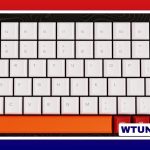
The keyboard top row is more than a line of keys above the main typing area. Depending on the keyboard, it may contain Escape, number keys, function keys, media controls, brightness controls, or programmable shortcuts. Its design affects how quickly you can reach common commands and how much desk space the keyboard requires.
What counts as the top row?
The phrase “top row” can describe slightly different parts of a keyboard. On a traditional desktop model, the uppermost area usually begins with the Escape key, followed by a dedicated function row labeled F1 through F12. The number row sits immediately below it. On some compact keyboards, however, the function row is removed and its commands are accessed through a secondary layer.
Laptops often combine several roles on the same keys. A function key may also control screen brightness, wireless connectivity, audio volume, playback, or another device feature. The exact symbols and behavior depend on the keyboard design and its software settings.
Function keys and secondary controls
Function keys provide a convenient row for commands used by the operating system or individual applications. Their behavior may change depending on whether the keyboard is set to prioritize standard F1–F12 input or the alternate icons printed on the keycaps.
Common secondary controls include:
- Volume adjustment and media playback
- Screen brightness and display controls
- Wireless or device toggles on some laptops
- Application shortcuts and system commands
- Custom macros assigned through keyboard software or firmware
On keyboards with an Fn key, these alternate commands are commonly activated by holding Fn while pressing another key. This arrangement allows a smaller keyboard to offer many functions without adding more physical keys.
How layouts change the top row
The keyboard’s overall size has a major effect on the top row. Full-size keyboards generally retain a dedicated function row along with the number pad and navigation cluster. They suit users who want direct access to a broad set of keys and do not mind a larger footprint.
Tenkeyless keyboards remove the numeric keypad but normally keep the function row. They preserve much of the familiar layout while freeing space on the desk. A 75 percent keyboard keeps many of the same functions but places the keys closer together, reducing gaps between sections.
Smaller 60 percent and 65 percent keyboards may omit the dedicated function row altogether. F1 through F12 and other missing commands are then reached through a function layer. This saves space, but it requires remembering key combinations and may be less convenient for tasks that use function keys frequently.
Split and ergonomic keyboards can arrange the upper keys differently to follow the position of the hands. Specialized keyboards may add macro keys, media controls, rotary encoders, or other input features above the main key area.
Programmable top rows and layers
Programmable keyboards allow the top row to be adapted to a particular workflow. Depending on the keyboard and its configuration tools, you may be able to remap individual keys, create macros, or assign different commands to separate layers.
For example, one layer might provide ordinary F1–F12 input, while another turns the same keys into media controls or application shortcuts. A dedicated macro row can make repetitive commands easier to reach, while a rotary control may be useful for tasks involving volume, scrolling, or other adjustable values.
Customization is not limited to software. Keycap profiles, legends, and switch choices affect how the top row feels and sounds. Consistent labeling is especially helpful on compact keyboards, where one key may perform several functions.
Choosing a top row for different tasks
The best arrangement depends on how often you use these keys and whether you prefer direct access or a smaller keyboard.
- Office and productivity work: A dedicated function row can make recurring commands and application shortcuts easier to reach.
- Programming and spreadsheets: Direct access to function keys may be useful when software relies on them for navigation or commands.
- Design and video work: Programmable keys can place tool changes, timeline actions, or other application-specific commands close at hand.
- Gaming: Consistent key placement and responsive input may matter more than having a large number of extra controls.
- Streaming and media control: Dedicated media keys or programmable macros can reduce the need to switch away from the active window.
Ergonomics and reach
The top row is farther from the home position than the main letter keys, so frequent use may require extra finger, wrist, or arm movement. Keyboard angle, tenting, split designs, and the spacing between key groups can all affect how comfortable the row feels during extended sessions.
Consider how often you use the function row before choosing a compact layout. If you rarely need it, layered access may be a worthwhile space-saving trade-off. If you use those keys constantly, a full function row or a separate macro pad may reduce repeated reaching and key combinations.
Making the right choice
When comparing keyboards, check whether the top row is dedicated, compressed, or shared with secondary controls. Also look for Fn-layer behavior, remapping support, application profiles, and the physical spacing of the keys. A well-designed top row should match your most frequent commands without making the keyboard unnecessarily large or difficult to use.