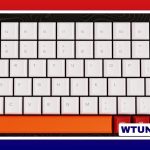
A white and black keyboard can be a simple design choice, but the best model should also match the way you work, play, and customize your setup. The two-tone color scheme suits minimalist desks, gaming stations, and professional workspaces alike. More importantly, the keyboard’s switches, layout, keycaps, lighting, connectivity, and firmware determine whether it feels comfortable and remains useful over time. The keyboard color contrast influences perception of key legends and interacts with backlighting and switch choice.
Start with the layout and daily use
Before comparing colors or lighting effects, decide which layout fits your routine. A full-size keyboard includes a number pad and dedicated navigation keys, making it practical for spreadsheets, accounting, and frequent data entry. Tenkeyless keyboards remove the number pad to create more mouse space while retaining the main navigation cluster.
Compact formats such as 60 percent or similar layouts take up even less room and are easier to transport. They can be a good choice for gaming or small desks, although some functions may require holding a function key or using programmable layers. If you regularly use media controls, arrow keys, or a number pad, a larger layout may be more convenient.
Choose a switch feel you will enjoy
On a mechanical keyboard, the switch has the greatest effect on typing feel and sound. The main categories are:
- Linear switches: Smooth from top to bottom, with no tactile bump. They are often chosen for fast, uninterrupted key presses.
- Tactile switches: Provide a noticeable bump during the key press, which can help users sense actuation while typing.
- Clicky switches: Add a distinct click to the tactile response. They offer strong feedback, but their volume may not suit shared spaces.
There is no universally best switch. Personal preference, typing technique, and tolerance for noise matter more than the label. If possible, test a switch sampler or a keyboard with hot-swappable sockets. Hot-swap support allows switches to be replaced without soldering, making it easier to change the feel later.
Look beyond the color scheme
White and black keycaps create strong contrast, but each finish has practical characteristics. White surfaces can reflect surrounding light and make backlighting appear softer and brighter. Black keycaps may reduce the appearance of some glare and can be less visually affected by certain marks. Either color can show dust, fingerprints, or wear depending on its texture and finish.
Keycap material also matters. PBT is commonly selected for its resistance to developing a glossy surface with use, while ABS keycaps can offer a smoother feel and are widely used across different keyboard styles. Double-shot and dye-sublimated legends are designed to remain readable as the keycaps age. The profile—the shape and height of each key row—changes finger position and travel, so it is worth checking whether a keyboard uses a low-profile, OEM, or taller sculpted design.
Consider lighting and visibility
Backlighting can be functional, decorative, or both. Basic white illumination works well with a clean black-and-white design and can improve visibility in dim conditions. Per-key RGB lighting provides more control over colors, effects, and highlighted keys, which may appeal to gamers or people building a coordinated desk setup. When comparing white and black keyboards, consider gaming keyboard connectivity to balance aesthetics, responsiveness, and cable convenience.
Lighting results depend on the keycap design. Opaque caps with front-facing legends may produce a different effect from shine-through caps, and white keycaps can spread light more broadly across the surrounding area. If appearance is important, consider how the case, keycaps, and lighting work together rather than judging the color combination alone.
Compare wired and wireless connectivity
A wired USB connection is straightforward and avoids the need to manage a battery. It is often preferred for stationary gaming and other setups where the keyboard remains on one desk. A detachable USB-C cable can make storage, replacement, and transport easier.
Wireless keyboards offer a cleaner desk and greater flexibility. Bluetooth is useful for switching among compatible devices, while keyboards with multiple connection modes may support a desktop, tablet, or phone. Check how device switching works and whether the keyboard stores more than one connection. For any wireless model, battery access and charging convenience are practical considerations that can matter more than appearance.
Features for gaming, work, and customization
A black and white gaming keyboard may include anti-ghosting, N-key rollover, adjustable polling settings, dedicated media controls, and programmable keys. These features can be useful, but they should not replace choosing a comfortable switch and suitable layout.
For programming, writing, and creative work, remapping can be especially valuable. Keyboards compatible with tools such as QMK or VIA may allow users to assign shortcuts, create layers, and configure macros at the keyboard level. Manufacturer software can also provide lighting controls and profile management. If customization is a priority, verify which functions work without software and whether profiles are stored onboard.
Plan for maintenance and future upgrades
Regular cleaning helps keep a keyboard reliable. Remove loose debris carefully, wipe the case with an appropriate dry or lightly damp cloth, and take extra care around switches and stabilizers. If keycaps are removed, keep them organized so they return to the correct positions.
For long-term flexibility, look for hot-swap sockets, a standard keycap layout, replaceable cables, and accessible firmware options. These features make it possible to change switches, keycaps, or sound-dampening components without replacing the entire board. Whether you choose a compact white and black mechanical keyboard for everyday work or a feature-focused gaming model, the best purchase is the one whose feel, layout, and functions fit your actual routine.