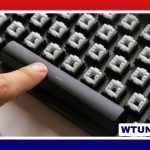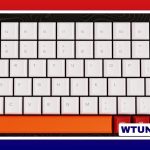
A wireless keyboard with a built-in trackball combines typing and cursor control in one compact device. Instead of moving a separate mouse across a desk, you roll the stationary ball with your thumb or fingers. This design is especially useful for home theater PCs, media centers, kiosks, presentations, and workspaces where a conventional mouse has little room to move. See the model compatibility checklist to confirm which brands support this wireless keyboard with ball mouse.
How a keyboard with a trackball works
The keyboard sends keystrokes wirelessly while the integrated trackball controls the pointer. Depending on the model, the connection uses a small 2.4 GHz USB receiver or Bluetooth. USB receiver models are often simple to set up with desktops and media devices, while Bluetooth can be useful with laptops, tablets, and other compatible equipment.
A trackball differs from a touchpad because it provides a physical rolling surface rather than a flat gesture area. It also differs from a standard mouse because the device remains in place. This can make cursor control more practical when you are sitting on a sofa, working in a confined area, or using a computer mounted to a wall or equipment rack.
Common designs and layouts
Wireless trackball keyboards generally fall into two broad categories:
- Mini keyboards: These use a reduced layout and are designed for portability, media navigation, and casual typing. They may include shortcut keys, a backlight, or a thumb-operated ball.
- Full-size keyboards: These provide a more familiar key arrangement and may include a number pad, function row, and larger palm rest. They are more suitable for longer typing sessions or fixed workstations.
Trackball placement affects comfort. A ball positioned near the edge of a mini keyboard is commonly operated with the thumb, while a larger central ball may be controlled with a finger or palm. Neither arrangement is automatically better; the right choice depends on hand size, typing posture, and how precisely you need to move the pointer.
Where these devices are useful
Home theater and media computers
A compact keyboard with trackball can control streaming menus, browse the web, and enter search terms from a couch. Because it does not require a table or mouse pad, it is convenient for living-room setups.
Kiosks and restricted work areas
In a kiosk, equipment cabinet, or point-of-sale installation, there may be no suitable surface for a mouse. A stationary trackball avoids the need to move the entire pointing device and is less likely to run into nearby objects. For smoother pointer control, update the mouse driver software after pairing this wireless keyboard with ball mouse.
Presentations and mobile support work
A small wireless unit can be carried with a laptop for presentations, demonstrations, or temporary workstation setup. Typing and pointer control remain available without packing a full keyboard and separate mouse.
Accessibility and specialized tasks
Some users find a trackball easier to operate than a mouse because cursor movement requires less arm travel. It can also suit technicians, control-room operators, and others who need pointer control in a cramped or fixed position. Comfort varies from person to person, so testing the ball position and key layout is worthwhile when possible.
What to check before buying
- Keyboard size: Choose a mini layout for portability and media use, or a larger layout for frequent typing and access to standard keys.
- Connection type: Confirm whether your computer or media device supports Bluetooth. For USB receiver models, check that a suitable USB port is available.
- Operating system support: Basic typing and pointer functions are usually the most broadly compatible, but programmable buttons and special scrolling features may require additional software.
- Power: Some keyboards use replaceable batteries, while others have a rechargeable battery and charging cable. Consider how often the device will be used away from a desk.
- Trackball size and location: A larger ball may feel easier to control, while a thumb-operated design can keep the keyboard especially compact. Look for a layout that does not cause accidental pointer movement while typing.
- Ergonomics and build: Examine key spacing, palm support, weight, and the position of mouse buttons. A lightweight model is convenient to carry, but a heavier unit may stay more stable during use.
Manufacturers such as iPazzPort and Rii have produced compact keyboard-and-trackball devices, while Adesso and Perixx have offered larger integrated pointing-device designs. Separate products from companies such as Logitech or Kensington may be preferable if you want a conventional keyboard paired with a standalone trackball rather than an all-in-one unit.
Cleaning and troubleshooting
Dust, skin oils, and debris can collect around the ball and its rollers. If the design allows the ball to be removed, wipe it with a soft, dry cloth and clean the surrounding rollers carefully with a cotton swab. A small amount of isopropyl alcohol can be used on appropriate surfaces, but avoid allowing liquid to enter the keyboard. For sealed trackballs, use light surface cleaning and short bursts of compressed air rather than forcing the mechanism open.
Intermittent response may indicate a weak battery, an obstructed USB receiver, or debris around the ball. Replace or recharge the battery, move the receiver to a clear port when possible, and clean the trackball before assuming the device has failed. Keep the keyboard dry and store it away from excessive heat.
Choosing an integrated pointing solution
A wireless keyboard with a built-in trackball is most valuable when space, portability, or simplified control matters more than a traditional desktop arrangement. Compare the layout, connection method, power system, ball placement, and software support with the way you intend to use it. For couch-based media control, a mini keyboard may be ideal; for regular office typing, a larger model or a separate keyboard and trackball may provide better comfort.