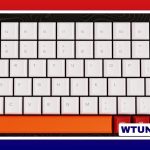
A Logitech 60% keyboard is designed for people who want the essential keys in a smaller, more focused layout. By removing the dedicated function row, navigation cluster, and number pad, this format leaves more room for mouse movement and creates a cleaner desk setup. It can be a strong choice for gaming, travel, and minimalist workspaces, but the compact design also requires users to access many commands through function-layer shortcuts. Check Logitech model details for brand-specific layout, firmware, and compatibility information about the 60 keyboard.
What makes a 60% keyboard different?
A 60% keyboard keeps the main letter, number, and modifier keys while eliminating several dedicated sections found on larger keyboards. Arrow keys, F-keys, media controls, and navigation commands are commonly accessed by holding a function key and pressing another key.
This layout creates a small, symmetrical board that is easier to carry and takes up less desk space. It can also encourage a more centered typing position because the mouse does not need to sit as far away from the keyboard. However, the reduced number of physical keys is not ideal for every workflow. Users who frequently work with spreadsheets, function-key commands, or page-navigation controls may need time to adjust.
Design, portability, and everyday comfort
The main appeal of a Logitech 60 keyboard is its compact footprint. It fits more easily into a backpack, works well on smaller desks, and leaves additional room for a large mouse pad. This is particularly useful for people who move between workspaces or want a less crowded gaming station.
Build quality remains important despite the smaller size. When comparing models, look for a case that feels stable, keys that do not wobble excessively, and stabilizers that keep longer keys consistent during use. A compact keyboard should still feel solid when typing or gaming. The smaller layout may also help some users keep their hands closer together, although comfort ultimately depends on personal preference and typing habits.
Switches and typing feel
The typing experience depends heavily on the switches used by the particular model. Mechanical switches generally fall into three broad categories:
- Linear switches: Smooth from the beginning of the press to the bottom, making them popular with many gamers.
- Tactile switches: Provide a noticeable bump that confirms the key has begun to actuate.
- Clicky switches: Add a distinct sound and tactile response, which some typists enjoy but may be unsuitable in shared spaces.
Some Logitech compact models or related mechanical designs may also offer hot-swappable switches. This feature allows compatible switches to be changed without soldering, giving enthusiasts more freedom to experiment with sound and feel. Confirm the specifications of the exact model before assuming this feature is included. Pair your Logitech 60 Keyboard with a matching illuminated mouse for a cohesive desktop setup.
Gaming and productivity performance
For gaming, a 60% board can provide more freedom for mouse movement, especially when using low sensitivity. Its smaller size also reduces the chance of the keyboard interfering with the mouse during wide movements. Logitech gaming models may include software features focused on remapping, profiles, lighting, and other custom controls, depending on the product.
Productivity use is more dependent on your habits. Writers and developers who mainly use letters, numbers, and standard shortcuts may adapt quickly. F-keys, arrow keys, and navigation commands can become convenient once the layer combinations become familiar. On the other hand, accounting, data-entry, and CAD workflows may benefit from a dedicated number pad or more readily available function keys.
Customization and software
A model such as the Logitech G PRO X 60 is intended to provide a balance between a compact layout and software-based customization. Depending on the specific product, Logitech software may allow users to remap keys, create macros, configure application or game profiles, and adjust RGB lighting.
Customization can also extend to the hardware. Owners may change compatible keycaps or switches, and some enthusiasts add dampening materials to alter the keyboard’s sound. These modifications are optional, but they can make a compact board feel more personal over time.
How to decide if it is right for you
Before buying a Logitech 60 keyboard, consider how often you use keys that are no longer dedicated. A 60% layout is a good fit if you value desk space, portability, mouse room, and a minimalist appearance. It may be less suitable if you regularly use a number pad, arrow keys, or the function row throughout the day.
- Check the exact layout and how its secondary functions are accessed.
- Choose a switch type that matches your preferred sound and resistance.
- Confirm whether the keyboard is wired or wireless and review compatibility requirements.
- Look for hot-swappable support if you plan to change switches.
- Consider whether the included software provides the remapping and profile options you need.
- If you require a number pad but still want a smaller main board, consider pairing it with an external numpad or choosing a tenkeyless keyboard.
Overall, a Logitech 60% keyboard offers a space-efficient setup with potential benefits for gaming, travel, and focused desk arrangements. Its biggest tradeoff is the need to use layered shortcuts instead of dedicated keys. If that adjustment fits your workflow, the compact design and customization options can make it a practical alternative to a full-size keyboard.