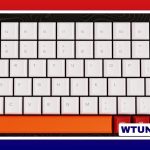
A PC keyboard without a number pad can make a noticeable difference to the way a desk feels and functions. By removing the dedicated numeric keypad, these keyboards take up less horizontal space, are easier to carry, and leave more room for mouse movement. They are commonly available in tenkeyless layouts, which retain the function row and navigation keys, as well as smaller compact layouts that remove additional keys. Explore how a tenkeyless layout influences ergonomics and connectivity in keyboard features and underlying technologies.
The right choice depends on how you work, play, and enter information. A compact keyboard can be an excellent fit for gaming, general typing, travel, and small workspaces, but people who enter numbers throughout the day may still prefer a full-size keyboard or a separate numpad.
Why choose a keyboard without a number pad?
The main benefit is a smaller footprint. Moving the mouse closer to the keyboard can help create a more centered working position and may reduce the need to reach outward with the shoulder. The shorter design is also useful on narrow desks, shared work surfaces, and setups where the keyboard needs to be stored between uses.
- More desk space: The mouse and other accessories have more room beside the keyboard.
- Improved portability: A shorter board is easier to pack for travel, events, or flexible workspaces.
- Cleaner setup: Fewer keys create a streamlined appearance and simplify cable management.
- Better mouse positioning: Gamers can keep the mouse closer to the main typing area.
Removing the numpad does not necessarily mean giving up advanced features. Compact keyboards may include mechanical switches, programmable keys, RGB lighting, wireless connectivity, and customizable layers in a much smaller case.
Understanding compact keyboard layouts
Tenkeyless keyboards
A tenkeyless, or TKL, keyboard removes the number pad while generally keeping the main letter keys, function row, arrow keys, and navigation cluster. This makes it a practical transition for people who want a smaller board without changing their everyday shortcuts too much.
Smaller compact layouts
Some keyboards reduce their size further by removing the function row, navigation keys, or arrow-key cluster. These keys may be accessed through function layers or programmable combinations. Smaller layouts save more space, but they require a greater adjustment and may be less convenient for applications that use navigation or function keys frequently.
Who benefits from a no-numpad keyboard?
Gamers often choose compact keyboards because the essential gaming keys remain close together while the mouse has more freedom of movement. The reduced width can be especially helpful for setups that use broad mouse movements or limited desk space.
Writers, programmers, students, and general home-office users may also prefer the compact shape when most of their work involves the main typing area, shortcuts, and navigation commands. A wireless model can be convenient for a living-room PC or a setup that needs to be cleared quickly. For a streamlined desk setup, compact red keyboards pair well with layouts that omit the number pad.
By contrast, a dedicated number pad is valuable for accounting, spreadsheets, data entry, cashiering, and any workflow that involves frequent numeric input. If you only need number-pad keys occasionally, a compact keyboard can be paired with a separate or detachable numpad when necessary.
Features to compare before buying
Switch type and typing feel
Mechanical switches are available in tactile, linear, and clicky varieties. Tactile switches provide a noticeable bump, linear switches offer a smooth keypress, and clicky switches add an audible click. Membrane and other keyboard designs may suit users who prefer a softer or quieter feel. If possible, try different switch types before choosing.
Gaming performance
For gaming, look for dependable anti-ghosting and n-key rollover, which help the keyboard register multiple simultaneous keypresses. Polling rate, actuation consistency, macro support, and build quality may also matter, depending on the games you play. Wired connectivity remains a straightforward choice for users who prioritize a consistent connection.
Wireless connectivity
Bluetooth is useful for everyday typing and pairing with multiple devices. A 2.4 GHz wireless dongle is often selected when lower latency is more important, particularly for gaming. Some keyboards support both options, allowing one board to serve a desktop, laptop, or living-room computer. Check battery life, charging method, and whether the keyboard can be used while charging.
Customization and maintenance
Hot-swappable switches allow compatible switches to be changed without soldering. Programmable layers, onboard profile storage, and configuration software can make missing keys easier to access and let you assign shortcuts or macros. USB-C charging is another practical feature on wireless models.
Choosing the best layout for your routine
Start by considering how often you use the numeric keypad, function row, arrow keys, and navigation cluster. Choose a TKL layout if you want the familiar structure of a full-size keyboard with less width. Select a smaller layout when portability and desk space matter more than immediate access to every dedicated key.
Also consider switch feel, noise, connection type, battery requirements, keycap height, keyboard angle, and carrying needs. A compact keyboard should save space without making your regular tasks awkward. When numeric entry is occasional rather than central to your work, a PC keyboard without a number pad can provide a comfortable, flexible, and uncluttered setup.