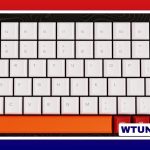
The optimum keyboard is not necessarily the most expensive model or the one with the most elaborate lighting. It is the keyboard that suits the way you work, the space on your desk, and the typing experience you prefer. A good choice should feel comfortable over long sessions, provide the keys and connections you actually need, and remain reliable as your daily demands change. For comparisons and detailed reviews, check our keyboard buying guide to make informed keyboard choices.
Start with your everyday tasks
Before comparing switches, keycaps, or software, identify how you use a keyboard most often. Different tasks place different demands on the layout and controls.
- Writing and programming: Comfort, accurate key feedback, and a layout that makes frequent shortcuts easy to reach are usually priorities.
- Gaming: Consistent input, dependable connectivity, rollover or anti-ghosting features, and responsive controls may matter most.
- Video editing and creative work: A full-size layout, dedicated navigation keys, or programmable controls can make repeated commands easier to access.
- Mixed use: A flexible mechanical keyboard with a familiar layout and both wired and wireless options can be a practical compromise.
Writing down the keys and functions you use repeatedly can prevent you from paying for features that will rarely affect your routine.
Choose a switch feel you can live with
On a mechanical keyboard, the switch beneath each key has a major influence on sound, resistance, and feedback. The three broad categories are linear, tactile, and clicky.
- Linear switches move smoothly without a pronounced bump. They provide a consistent feel and are often appealing to people who prefer uninterrupted key travel.
- Tactile switches provide a noticeable bump during the press. This feedback can make each keystroke feel deliberate and may suit people who spend much of their time typing.
- Clicky switches combine tactile feedback with a distinct clicking sound. They can be enjoyable in a private workspace, but the noise may be unsuitable for shared rooms or offices.
Actuation force and travel are just as personal. A lighter switch may feel quick and reduce the effort required for each press, while a heavier or deeper switch can feel more controlled. If possible, try a switch tester or use a keyboard in person before buying. Product descriptions help, but they cannot fully convey sound and feel.
Match the layout to your desk and workflow
Keyboard size changes both the number of available keys and the position of your hands. A full-size keyboard includes a dedicated number pad and is useful for frequent numeric entry. Tenkeyless models remove the number pad to create more room for a mouse, while compact layouts remove additional keys and rely more heavily on shortcuts or function layers.
Compact boards can reduce desk clutter, but make sure you are comfortable accessing navigation keys, function-row commands, and arrow keys before choosing one. If you regularly work with spreadsheets, editing controls, or numeric data, the space savings may not justify giving up a dedicated number pad.
Ergonomic and split keyboards take a different approach by changing the angle and spacing of the key sections. Adjustable tilt, a suitable wrist rest, and a neutral hand position can improve comfort, but an ergonomic layout often requires an adjustment period. Persistent pain should not be ignored or treated as a keyboard-buying problem alone. After choosing an optimum keyboard, explore beginner piano practice techniques to build confidence and coordination.
Consider connectivity and software carefully
A wired USB connection is simple and does not require battery charging. It is also a sensible choice when you want a consistently reliable connection. Bluetooth is convenient for moving between devices such as a computer, tablet, and phone. Some keyboards support both Bluetooth and a dedicated wireless receiver, allowing greater flexibility.
For gaming or other latency-sensitive tasks, check the connection method and return policy rather than assuming every wireless keyboard will feel identical. Battery life, charging method, and the ability to use the keyboard while charging are also worth checking.
Keyboard software can enable remapping, macros, lighting controls, and multiple profiles. Onboard memory is particularly useful because it can store settings on the keyboard instead of requiring software on every computer. If you prefer a simple setup, avoid choosing a model whose most important functions depend on an application you do not want to use.
Look beyond appearance and specifications
Build quality affects how stable and pleasant a keyboard feels. A rigid frame can reduce flex, while well-made stabilizers help larger keys such as the space bar and Enter key feel more consistent. PBT keycaps generally resist surface wear better than basic ABS keycaps, although the overall construction matters more than any single material.
Hot-swappable sockets make it possible to change compatible switches without soldering. This can extend the useful life of a keyboard or let you refine its feel later. Also review the warranty, replacement-part availability, and support policy. A keyboard is used thousands of times, so long-term serviceability can be more valuable than decorative extras.
Make the final choice
Prioritize the features that affect your hands every day: switch feel, layout, key spacing, height, and connection reliability. Treat lighting, unusual designs, and extensive macro features as optional unless they serve a clear purpose in your workflow. The optimum keyboard is the one that makes common tasks comfortable and predictable, fits your workspace, and offers enough durability to remain useful long after its novelty has faded.