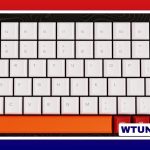
Mac keyboards share a familiar layout, but the keys can vary considerably between a MacBook Air, MacBook Pro, and an external Magic Keyboard. Differences in key mechanisms, function rows, Touch Bar models, regional layouts, and key spacing matter when you are learning shortcuts, buying accessories, or replacing a damaged key.
Understanding the main Mac key symbols
Apple keyboards use several modifier keys that may look unfamiliar if you are moving from Windows or another platform. Learning their symbols makes shortcuts easier to read and remember:
- Command (⌘): The main shortcut key in macOS. It is used for actions such as copying, pasting, saving, and switching applications.
- Option (⌥): Often provides alternate characters, additional menu commands, or extended text-navigation functions.
- Control (⌃): Used in some system and application shortcuts. Control-clicking commonly opens a contextual menu.
- Fn or Globe: Changes the behavior of the function row and may provide access to features such as emoji or input-source selection, depending on the keyboard.
- Escape: Closes menus, cancels some operations, and exits full-screen or active interface elements in compatible apps.
The upper row may contain brightness, volume, playback, and other controls instead of behaving as traditional F1–F12 keys. The exact options depend on the Mac and keyboard model.
How MacBook and Magic Keyboard layouts differ
MacBook keyboards are built into the laptop and generally use compact layouts. External Magic Keyboard models can have a similar arrangement, but their dimensions and available keys differ.
- MacBook Air: Uses a laptop-sized layout with an integrated trackpad and, on applicable models, a Touch ID power button.
- MacBook Pro: Some models from the 2016–2020 period included a Touch Bar instead of a conventional function row. Other models use physical function keys and may include Touch ID in the power button.
- Compact Magic Keyboard: Provides a separate keyboard for desktop use while retaining a relatively small footprint.
- Magic Keyboard with Numeric Keypad: Adds a number pad and a navigation-key cluster, making it more suitable for spreadsheets and frequent numerical entry.
Older MacBook keyboards may use a butterfly mechanism, while later designs use a scissor mechanism. These key structures are not interchangeable, so a keycap made for one generation may not fit another. External keyboard keycaps also differ from laptop keycaps in shape, mounting points, and profile.
Useful shortcuts for everyday work
A small set of shortcuts can reduce the need to move between the keyboard, mouse, and menus:
- Command + C: Copy selected content.
- Command + V: Paste copied content.
- Command + X: Cut selected content in applications that support it.
- Command + Space: Open Spotlight search.
- Command + Tab: Move between open applications.
- Command + S: Save in applications that support the shortcut.
- Option and Shift combinations: Extend text movement and selection commands in many editors.
Function keys can usually be used either as media and system controls or as standard F1–F12 keys. The keyboard settings in macOS allow you to choose which behavior is preferred and adjust options such as key repeat and repeat delay.
Touch Bar, Touch ID, and external keyboards
The Touch Bar appears only on certain MacBook Pro generations and replaces the physical function row with a touch-sensitive strip. Its controls can change according to the active application. It should not be treated as a standard feature across all Mac keyboards.
Touch ID is integrated into certain Mac laptops and some compatible external Apple keyboards. Its availability depends on the hardware combination and software requirements. If you move between devices, features such as Touch Bar controls and Touch ID may not be available in the same way on an external keyboard.
Choosing replacement keys and accessories
Before ordering a replacement keycap, identify the exact Mac model, keyboard generation, and layout. ANSI and ISO layouts differ in several areas, especially the shape of the Return key and the position of nearby keys. A full-size external keyboard also uses different key dimensions from a MacBook keyboard.
Keyboard covers can help protect against dust and spills, but they should be designed for the specific model. An ill-fitting cover may affect key travel, typing feel, or backlight visibility. For a damaged laptop key, avoid forcing the cap back into place: the clips and underlying mechanism are delicate, and incorrect installation can cause further damage.
Cleaning and troubleshooting Mac keys
Turn off and disconnect the keyboard before cleaning it. Use a soft, slightly damp, lint-free cloth for the surfaces and remove loose debris carefully. Avoid allowing liquid to enter between the keys.
If a key stops responding, first determine whether the problem is limited to one application or affects the whole system. Test another application, check the keyboard settings, and try an external keyboard when available. If the external keyboard works normally, the built-in keyboard may require inspection. Individual key replacement can be difficult, particularly on compact laptop keyboards, so professional service may be safer than a do-it-yourself repair.
Using Mac keys with other operating systems
When a Mac keyboard is used with Windows through virtualization or another supported setup, modifier keys may behave differently. Command commonly corresponds to Control, while Option commonly corresponds to Alt, but the exact mapping depends on the software and configuration. Test important shortcuts before relying on them in a different operating system.
Whether you are learning Mac shortcuts, setting up a desktop keyboard, or replacing a worn key, checking the exact keyboard model first will help you avoid compatibility problems and choose the right settings or replacement parts.