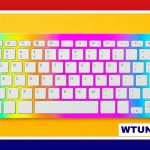
The best Logitech keyboard depends less on a single specification than on how you plan to use it. A keyboard for writing and office work has different priorities from one designed for competitive gaming, while frequent travelers may value a compact layout above almost everything else. To compare Logitech variants, consult our model-specific breakdown that details mainstream brand and model differences.
Logitech’s range includes quiet laptop-style keyboards, low-profile mechanical models, and gaming boards with wireless performance and switch customization. Use the guide below to narrow the choice by typing feel, connectivity, layout, and software.
Choose by your main use case
- Office work and writing: Look for stable keys, comfortable long-session typing, quiet operation, and useful backlighting.
- Programming and creative work: A dependable layout, easy access to function and media controls, and the ability to move between computers can be especially useful.
- Competitive gaming: Prioritize a responsive connection, a layout that leaves room for mouse movement, and switches that match your preferred actuation and feel.
- Travel and small desks: Compact or tenkeyless designs reduce the amount of space the keyboard occupies without requiring a full-size board.
Best Logitech keyboards by category
Best for general productivity: Logitech MX Keys
The MX Keys is aimed at people who want a refined, laptop-like typing experience for everyday work. Its scissor-style keys provide a familiar feel with stable keystrokes, and the backlighting is useful when working in changing light conditions.
It is a strong fit for writers, students, office workers, and anyone who prefers a quieter keyboard without moving to mechanical switches. The design also suits users who want a straightforward productivity keyboard rather than a board focused on gaming features.
Best Logitech mechanical keyboard for work: Logitech MX Mechanical
The MX Mechanical combines a slim design with low-profile mechanical switches. This makes it a useful middle ground for people who want more defined mechanical feedback but still prefer a relatively compact keyboard and shorter key travel than a traditional mechanical board.
It is particularly well suited to hybrid work, programming, and creative tasks. Multi-device Bluetooth pairing helps when switching between computers, while Logitech’s Options Plus software provides function-key customization and workflow features. Its compact footprint can also be helpful on a crowded desk or laptop tray.
Choose this model when typing feel is your priority and you want mechanical feedback without the height and bulk of a conventional gaming keyboard.
Best for competitive gaming and switch flexibility: Logitech G Pro X
The G Pro X takes a more focused approach to gaming. Its compact tenkeyless layout leaves additional room for mouse movement, which can matter in games that use low sensitivity. The board’s hot-swappable GX switch design allows users to change between compatible clicky, linear, or tactile switches rather than being locked into one feel.
This flexibility makes it appealing to competitive players, streamers, and enthusiasts who care about actuation, sound, and the ability to personalize the typing experience. It is also a practical choice when a smaller gaming setup is more important than a number pad. If you like Logitech keyboards, consider a complete Logitech setup that pairs typing comfort with matching peripherals.
Best low-profile wireless gaming option: Logitech G915
The G915 family is designed for users who want mechanical switches in a slim, polished form. Its low-profile GL switches offer a faster, flatter typing style than traditional full-height mechanical keyboards, while Lightspeed wireless is intended for responsive gaming use.
The G915 TKL version removes the number pad to create a more compact layout. It also combines wireless connectivity, per-key RGB lighting, and a premium-feeling build, making it suitable for gamers and streamers who want a clean desk setup without giving up mechanical feedback or lighting customization.
Important features to compare
Typing feel and noise
Scissor-switch keyboards such as the MX Keys tend to feel closer to a laptop keyboard. Low-profile mechanical models such as the MX Mechanical and G915 provide more pronounced mechanical feedback while keeping the overall design slimmer. On the G Pro X, the switch type has a particularly large effect on sound and actuation.
Connectivity
For productivity, multi-device Bluetooth pairing can be more valuable than gaming-focused wireless performance because it makes switching between computers easier. For gaming, Logitech Lightspeed wireless is the more relevant feature, especially when low-latency response is a priority. Wired operation may still be preferable if you do not want to manage battery charging.
Layout and desk space
A full-size keyboard includes a number pad, which is useful for frequent data entry. Tenkeyless and compact models reclaim desk space and can make it easier to position a mouse. Before buying, consider whether you regularly use the number pad, dedicated media controls, or a row of function keys.
Software, lighting, and battery use
Logi Options Plus is associated with Logitech’s productivity keyboards, while Logitech G Hub supports gaming models. Depending on the keyboard, these applications can help with key remapping, macros, device management, and lighting profiles. Backlighting can also affect how long a wireless keyboard operates between charges, so consider whether you need it on continuously.
Which Logitech keyboard should you buy?
Choose the MX Keys for quiet, laptop-style productivity. Choose the MX Mechanical if you want low-profile mechanical feedback for office work or programming. The G Pro X is the better match for compact competitive gaming and switch experimentation, while the G915 suits gamers who want a slim wireless mechanical keyboard with customizable lighting.
When comparing models, start with your daily workflow, then evaluate switch feel, layout, connection type, and software support. Those factors will have a greater effect on long-term satisfaction than appearance alone.