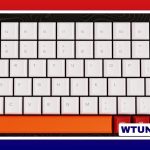
Alice-style keyboards have a distinctive shape, with angled alphanumeric sections and a divided lower area designed around the thumbs. That layout can make ordinary keycap sets a poor fit, even when the keyboard uses familiar MX-style switches. Choosing the right Alice keycaps therefore involves more than picking a colourway. You also need to match the key sizes, profile, materials, and legend style to your specific board. Consider Alice compatible keycaps when choosing accessories to personalize your mechanical keyboard's feel and look.
Why Alice keycaps need special attention
The Alice layout is not completely standardised. Different boards may use different combinations of modifier keys, thumb keys, and spacebars. Some have split spacebars, while others use unusual arrangements of 1u and 1.25u keys in the bottom row. A keycap set can look suitable in its product photos yet still be missing one or more sizes required by your keyboard.
The safest approach is to treat your board’s layout as the starting point. Before ordering, compare its key positions with the seller’s layout diagram rather than relying on the product name alone.
Check compatibility before buying
There are three main compatibility questions to answer:
- What switch stems does the board use? Most aftermarket Alice keycaps are made for Cherry MX-compatible stems. This applies whether the switches are installed on a hot-swap PCB or soldered in place, provided the stem shape matches.
- Which bottom-row sizes are required? Measure or identify each modifier and thumb key, including any 1u, 1.25u, or other nonstandard keys.
- What spacebar arrangement does the board use? A split spacebar or an unusual stabiliser layout may require specific spacebar sizes that are not included in a general keycap kit.
Pay particular attention to the thumb cluster. It is one of the most recognisable features of an Alice board, but it is also one of the areas most likely to differ between models.
Choosing a keycap profile
Profile affects both the appearance and the feel of an Alice keyboard. Sculpted profiles, such as Cherry or OEM, use different heights across the rows and can complement the angled arrangement of the board. They are a familiar choice for users who want a conventional typing feel.
Uniform profiles such as DSA have a more consistent height and shape from row to row. Some typists prefer this flatter, more even surface because it makes key movement feel predictable across the split layout. Higher profiles, including SA-style sets, provide a more pronounced shape and a distinctive retro appearance, but they also change the overall typing angle and feel.
There is no single profile that suits every Alice user. If you are uncertain, a moderate sculpted profile is a practical starting point, while uniform or high-profile sets are useful choices when a specific feel or visual style is the priority.
Materials and legend durability
Keycap material affects texture, shine, and long-term appearance. ABS keycaps can develop a smoother, shinier surface with regular use. PBT keycaps generally have a firmer feel and are more resistant to that type of shine. These Alice layout keycaps can transform an ergonomic typing setup into a more comfortable, expressive instrument.
Legend construction matters as well. Double-shot legends are moulded as part of the keycap, while dye-sublimated legends are printed into the surface of PBT keycaps. Both methods are commonly selected for their durability. When choosing a set for daily typing, PBT with dye-sublimated or double-shot legends offers a sensible balance of wear resistance and appearance.
Using colour and custom keys effectively
The split layout gives you several opportunities to use colour deliberately. Alternate modifier colours can highlight the lower sections, while contrasting thumb keys can make the board’s unusual geometry more visible. Some kits include extra keys specifically for these variations, so check the contents before assuming a set offers enough options.
Artisan keycaps can also be used on prominent positions such as a thumb key, spacebar, or backspace key. These additions are primarily visual and personal, but they can help turn the keyboard into a more cohesive part of a desk setup.
Installing Alice keycaps
Remove the existing caps with a keycap puller, taking care around larger keys and their stabilisers. Align each replacement keycap with the switch stem and press it down evenly. Avoid forcing a key if it does not sit correctly; a mismatched size or stabiliser position may be the problem.
Split spacebars and larger thumb keys deserve extra attention. Confirm that the keycap matches the board’s stabilisers and that the required size is included in the kit. If the switch stems are not compatible with the caps, installation may require different switches or an appropriate compatibility solution rather than extra pressure.
Further customisation
Keycaps are only one part of the final typing experience. Case foam or other dampening materials can alter the keyboard’s acoustics, while stabiliser changes can affect the feel of larger keys. Keycap wall thickness also contributes to the sound and character of the board.
Start with compatibility, then choose the profile and material that suit your typing habits. Once those fundamentals are right, colourways and other custom touches can make an Alice keyboard both comfortable to use and distinctly your own.