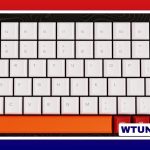
The best ergonomic keyboard is not necessarily the one with the most features. It is the one that helps you maintain a comfortable, neutral position while supporting the way you work. Writers, developers, remote workers, designers, data-entry professionals, and anyone who spends long periods typing may benefit from a keyboard that reduces awkward wrist and shoulder positions.
Ergonomic keyboards come in several forms, from gently curved single-piece designs to fully split models with adjustable tenting. The right choice depends on your desk, typing habits, preferred key feel, and willingness to learn a different layout.
What makes a keyboard ergonomic?
A conventional keyboard keeps the hands close together and generally places them in a straight, flat arrangement. An ergonomic design aims to support a more natural position for the hands, wrists, forearms, and shoulders.
Useful features may include:
- Split construction: Separate halves can be positioned at a more comfortable width and angle.
- Tenting: Raising the inner edges of the keyboard can reduce the need to rotate the forearms inward.
- Adjustable tilt: Different tilt options allow you to fine-tune wrist and hand positioning.
- Low-force switches: Lighter keys may reduce the effort required during extended typing.
- Stable construction: A keyboard that does not slide or flex is easier to use consistently.
- Programmable layers: Custom keymaps can make frequently used shortcuts easier to reach.
These features are most useful when they allow adjustment rather than forcing every user into the same position. Comfort is personal, so a keyboard that works well for one person may not suit another.
Split versus single-piece ergonomic keyboards
Split keyboards
A split keyboard gives you independent control over the position of each half. You can place the halves farther apart to accommodate your shoulders, change their angle, and sometimes use them in different positions on a desk or lap. This flexibility makes split designs appealing to users who want to fine-tune their posture.
Many split keyboards also support layers, macros, or extensive remapping. Those features can improve efficiency, but they may add a learning curve and require software configuration.
Single-piece designs
Curved, wave-shaped, and other single-piece keyboards offer ergonomic shaping without requiring you to manage two separate units. They are often simpler to set up and may be more convenient in shared workspaces or compact areas. However, they provide less freedom to position each hand independently.
When comparing designs, consider how much adjustment you genuinely need. A fully split keyboard offers the most positioning flexibility, while a single-piece model may be easier to adopt and move between workstations.
Choose switches and layout carefully
Switch feel has a major effect on typing comfort. Tactile switches provide physical feedback when a key is activated, which some users find helpful for accuracy. Linear switches have a smoother action, while low-profile designs reduce key travel and can feel more familiar to people moving from a laptop keyboard. Membrane keyboards may appeal to users who prefer a quieter or softer feel.
There is no universally best switch. If possible, test the key feel before committing, particularly if you are sensitive to noise, key resistance, or travel distance.
The layout also matters. A standard staggered layout may make the transition easier, while ortholinear or heavily remapped layouts can offer a more customized arrangement. Programmable layers are especially useful when a keyboard moves navigation keys, punctuation, or other familiar controls.
Match the keyboard to your workspace
Measure your desk and consider how you normally work before choosing a model. A compact split keyboard can be practical for a small desk or laptop setup, while a larger model may offer more dedicated keys and fewer layers to remember. Detachable cables can make storage and transport easier.
Look for a keyboard that works with your complete workstation. Your monitor should be positioned so you do not need to bend your neck, and your pointing device should be placed close enough to avoid repeatedly reaching outward. An ergonomic keyboard cannot compensate for every problem in an otherwise poorly arranged workspace.
How to transition to an ergonomic keyboard
Expect an adjustment period, especially when moving to a split, tented, or programmable layout. Start with a moderate setup rather than immediately using the most extreme angle. Keep your forearms supported and aim for relaxed shoulders and neutral wrists.
- Use the new keyboard for shorter sessions at first.
- Keep frequently used shortcuts easy to find while you learn.
- Practise accuracy before prioritising typing speed.
- Adjust the distance and angle of each half gradually.
- Stop and reassess if discomfort increases rather than trying to work through it.
A wrist rest is optional and should support the heel of the hand without pushing the wrists upward while typing. If you have persistent pain, numbness, or tingling, consider seeking advice from a qualified medical or occupational-health professional instead of relying on a keyboard change alone.
Maintenance and long-term value
Regular cleaning helps preserve the feel of the keys and prevents debris from collecting around switches. Check detachable cables and connectors periodically, and store the keyboard safely when transporting it. Replaceable keycaps, repairable components, firmware support, and a useful warranty may matter more over time than decorative features.
Ultimately, the best ergonomic keyboard is the one you can adjust to your body, use comfortably for your main tasks, and maintain consistently. Compare the amount of separation, available tenting, switch feel, layout, software support, and workspace fit before making a decision. A thoughtful setup and gradual transition are just as important as the keyboard itself.