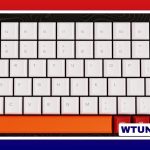
A mini foldable keyboard offers a useful middle ground between an on-screen keyboard and a full-size desktop model. It can add a more familiar typing experience to a phone or tablet without taking up much room in a bag. For hybrid workers, students, travellers, writers, and anyone who regularly changes workspaces, the folding design makes it easier to create a temporary workstation wherever a flat surface is available.
What makes a mini foldable keyboard useful?
The main advantage is portability. When folded, the keyboard takes up considerably less space than a conventional office keyboard, making it practical for a backpack, briefcase, or travel pouch. It can be especially helpful when a tablet or phone is capable of running productivity apps but its on-screen keyboard is too slow or uncomfortable for longer messages, notes, and documents.
A portable keyboard may also leave more of the display visible while typing. This is useful when writing emails, editing documents, entering information into a content-management system, or taking notes during a meeting. However, the compact format involves compromises: layouts may be smaller or less familiar, and some models omit dedicated navigation, number-pad, or function keys.
Key design and typing comfort
Small dimensions do not automatically make a keyboard ergonomic. The important question is whether the open keyboard gives your hands enough room to type naturally. Look at the key spacing, the size of frequently used keys, and the position of punctuation, arrows, and modifier keys. A layout that saves space by moving or shrinking familiar keys may increase errors, especially during fast typing.
Many folding keyboards use low-profile or scissor-style keys. These designs can provide a more laptop-like feel, although the exact response varies by model. If possible, test the keyboard before relying on it for extended work. Pay attention to key stability, travel, noise, and whether the central folding area creates an awkward gap beneath your hands.
Some designs open into a slightly split or angled arrangement. This may feel more natural for certain users, but a compact keyboard cannot provide the same adjustment range as a full ergonomic office keyboard. For long sessions, use a separate stand to raise the phone or tablet to a comfortable viewing height, and take regular breaks rather than treating the folding keyboard as a complete ergonomic solution.
Connectivity and device compatibility
Bluetooth is the most common connection method for mini foldable keyboards. It avoids a physical cable and generally works well with laptops, tablets, and smartphones that support compatible Bluetooth profiles. Before buying, check that the keyboard supports the operating systems you use and that its modifier and function keys behave as expected on each device.
Some keyboards can remember or switch between multiple paired devices. This is convenient if you move between a phone and tablet, but the switching method should be simple enough for your routine. A keyboard that frequently reconnects to the wrong device can be more frustrating than helpful. Mini foldable keyboards enable compact office typing, making spreadsheet and document editing more convenient on-the-go.
Battery and charging arrangements also deserve attention. Review the stated charging connection, indicator lights, and expected battery performance under the conditions described by the manufacturer. Backlighting, where available, can improve visibility in dim settings but may reduce the time between charges. A wired mode may be useful as a backup on models that support it, though not every folding keyboard offers one.
Where a mini foldable keyboard fits best
- Mobile writing: Pair it with a tablet or phone for emails, reports, interviews, and longer notes.
- Hybrid work: Keep it in a work bag for hot desks, meeting rooms, cafés, or other temporary work areas.
- Travel: Add physical typing to a lightweight device without carrying a full-size keyboard.
- Tablet-based creative work: Use it for captions, file names, messages, and project administration while leaving the tablet available for visual tasks.
- Limited desk space: Fold it away when the surface is needed for other equipment or paperwork.
It can also serve as a convenient secondary keyboard. For example, you might use a tablet as a lightweight writing device while keeping a larger keyboard at your main desk.
How to choose the right model
Start with the way you plan to carry and use the keyboard. Compare its folded dimensions and weight with the space in your everyday bag, then check the open dimensions to make sure the layout is workable. A very small folded package is not necessarily the best choice if the open keyboard is uncomfortable or difficult to use.
- Choose a familiar layout if you type quickly or rely on keyboard shortcuts.
- Check whether you need backlighting, dedicated function keys, or multi-device switching.
- Inspect the hinge and folding mechanism for a firm, stable feel.
- Look for a protective case if the keyboard will travel frequently.
- Confirm charging requirements and compatibility with every device in your setup.
- Consider the warranty and return policy, especially when buying a model you cannot test first.
Setup and care
Place the keyboard on a stable, level surface and fully open it before typing. Position the connected device so you are not repeatedly bending your neck to view the screen. If pairing problems occur, disconnect unused devices or remove old pairings so the keyboard does not automatically connect to the wrong equipment.
Keep the keys and hinge free from dust and debris. A gentle wipe and occasional air cleaning can help maintain key movement, while a case can reduce scratches and protect the folding joint during transport. Avoid forcing the keyboard past its intended open position, and store it folded only when the hinge is aligned correctly.
Is a mini foldable keyboard right for you?
A mini foldable keyboard is most valuable when portability matters more than a complete desktop layout. It can make tablet and phone typing substantially more practical, but it should be judged by its open typing comfort, layout, connection reliability, and hinge quality rather than its folded size alone. If those features match your working habits, it can be a useful companion for mobile work and a compact backup for a larger office keyboard.