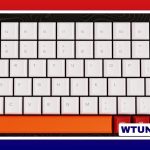
Rapid trigger keyboards are designed for players who value quick, repeatable input. Instead of waiting for a key to return to a fixed reset point before it can register again, rapid trigger technology detects changes in key position and can activate or reset the input over a very short distance. This makes the keyboard particularly appealing for games that rely on fast movement corrections, repeated taps, and precise timing.
The fastest keyboard is not automatically the best choice for every player. Switch feel, software reliability, comfort, construction, and the ability to adjust settings all affect how useful a rapid trigger board will be in daily use. The right choice should match both the games you play and the amount of typing you do outside them.
How rapid trigger keyboards work
Traditional keyboards generally use a defined actuation point and reset point. A key must travel far enough to activate, then return past a particular position before another press is recognised. Rapid trigger systems make this behaviour more dynamic by responding to the direction and distance of key movement.
Depending on the design, the keyboard may let you set a very short actuation distance or configure rapid trigger sensitivity independently for individual keys. This can make repeated presses feel more immediate, especially when making quick directional changes. The result depends on the switch technology, sensor implementation, firmware, and the quality of the keyboard’s configuration software—not simply on a headline polling-rate figure.
Features that matter most
Adjustable actuation and rapid trigger sensitivity
Per-key adjustment is one of the most useful features. Movement keys can be configured for fast activation and release, while keys used for typing or deliberate commands can be given a deeper, less sensitive setting. Profiles for different games are also helpful when one configuration does not suit every genre.
Switch and sensor design
Rapid trigger keyboards may use optical or other switch technologies designed to detect key movement with high consistency. Optical designs can offer contactless detection, while mechanical-style options may provide a more familiar feel. Compare the actual adjustment range and user controls rather than assuming one switch category is always superior.
Stable firmware and software
Fine-grained input settings are only valuable when they behave predictably. Look for software that makes actuation and rapid trigger controls easy to understand, supports profile storage, and does not require unnecessary background features. Onboard profile memory can be convenient if you move between computers or want settings to remain available without running a desktop application.
Build quality and ergonomics
A rigid chassis, stable keycaps, and consistent key travel help preserve the benefits of sensitive switches. Consider the keyboard’s size, layout, wrist position, and angle as well. A board that causes hand fatigue or accidental presses may be less effective than a slightly slower model that you can use comfortably for long sessions.
Input reliability
Anti-ghosting and N-key rollover help the keyboard recognise multiple simultaneous inputs. A high polling rate may also be relevant to latency, but it should be considered alongside switch response, firmware processing, the connection method, and the rest of the computer setup. No keyboard feature can eliminate delays elsewhere in the input chain.
Who benefits most from rapid trigger?
Rapid trigger is most noticeable in games where movement and timing are central. First-person shooter players may appreciate quicker strafing corrections, counter-movement, and repeated directional taps. Fighting-game players can value consistent short inputs for movement and combinations, while real-time strategy and MOBA players may benefit from rapid hotkey sequences.
For casual games or ordinary office typing, the advantage may be less important. Extremely sensitive settings can also produce accidental presses, particularly when typing or resting fingers on movement keys. This is why adjustable settings and separate profiles are more practical than leaving every key at its most sensitive configuration.
How to configure a rapid trigger keyboard
- Start with moderate sensitivity. Use a setting that feels responsive without causing unintended activations.
- Customise important keys first. Begin with movement or frequently repeated inputs rather than changing the entire board at once.
- Create game-specific profiles. A fast FPS setup may not be ideal for typing, strategy games, or general desktop use.
- Test repeated presses and releases. Check whether the keyboard reliably recognises quick taps, releases, and direction changes.
- Keep firmware and configuration software maintained. Updates may improve compatibility or correct software issues, but change settings gradually so you can identify what affects the feel.
Maintenance and buying advice
Dust, debris, and spills can affect any keyboard, and fine actuation settings may make inconsistent key movement more noticeable. Clean the board carefully, avoid forcing keycaps or switches, and follow the manufacturer’s guidance for removing components. If the keyboard supports replaceable switches, that can make future repairs or experimentation easier, but switch compatibility should be confirmed before buying replacements.
Before choosing a model, decide whether speed, typing comfort, compact size, tactile feedback, or profile management matters most. A rapid trigger keyboard is a specialised performance tool, not a guaranteed substitute for practice or better technique. The strongest overall choice is one that combines dependable detection with comfortable use, sensible adjustment controls, and a level of sensitivity you can manage consistently.