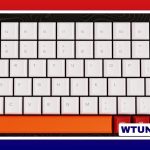
A Logitech keyboard can be a useful upgrade for MacBook users who want a more comfortable desktop setup, a full-size typing surface, or the flexibility to control several devices from one keyboard. Logitech offers wireless and compact models, as well as keyboards designed specifically around the macOS layout. Check brand and model details to confirm which Logitech keyboard fits your MacBook model and ports.
The right choice depends on how you use your MacBook. Writers and programmers may prefer a stable full-size keyboard, while people with limited desk space may want a compact model. If you regularly move between a MacBook, iPad, and phone, multi-device switching can be more important than size.
Will a Logitech keyboard work with a MacBook?
In most cases, yes. Logitech keyboards commonly connect to a MacBook through Bluetooth or a USB wireless receiver. Basic typing and many standard keys should work without installing additional software, although the exact compatibility and available features vary by model.
Modern MacBooks may not have traditional USB-A ports, so a keyboard that uses a USB receiver could require a suitable adapter or hub. Before buying, check whether the keyboard connects by Bluetooth, includes a receiver, or supports both methods. It is also worth confirming the keyboard’s macOS compatibility and the layout of its Command, Option, and function keys.
Logitech’s configuration software can provide additional controls on supported models. Depending on the keyboard, these may include custom shortcuts, key assignments, backlight settings, and application-specific commands. If you want a simple plug-and-play accessory, choose a model with a clearly marked Mac layout and use the software only when you need its extra features.
Why consider the Logitech MX Keys for Mac?
The MX Keys for Mac family is aimed at users who want a laptop-like typing feel in a desktop keyboard. Its low-profile scissor-style keys, stable construction, and Mac-focused legends make it a natural match for a MacBook-based workstation.
Depending on the model, useful features may include backlighting, rechargeable power, and the ability to pair with multiple devices. Multi-device controls are particularly helpful if you switch between a MacBook and an iPad or phone during the day. Instead of disconnecting and reconnecting, you can use the keyboard’s device-selection buttons to move between paired products.
The full-size MX Keys for Mac is generally better suited to a permanent desk. It offers a spacious layout and a conventional arrow-key area, which can be helpful for editing, coding, spreadsheets, and long writing sessions. The compact MX Keys Mini for Mac takes up less room and is easier to move, but its smaller layout may not suit everyone. For Apple tablet typing, compare this iPad keyboard with Logitech options designed for MacBook users.
How to connect a Logitech wireless keyboard
Bluetooth setup
- Turn on the keyboard and place it in Bluetooth pairing mode using the appropriate device button.
- Open Bluetooth settings on the MacBook.
- Select the keyboard from the list of available devices.
- Complete any pairing prompt shown on the screen.
After pairing, macOS should handle ordinary typing automatically. If the keyboard includes customizable controls, install the supported Logitech software and follow its setup instructions. Software features vary, so not every option is available on every keyboard.
USB receiver setup
For a receiver-based keyboard, connect the receiver to the MacBook directly or through a compatible adapter. The keyboard may pair automatically, or it may require the manufacturer’s pairing utility. A receiver can be useful where Bluetooth is inconvenient, but the required port or adapter should be part of your buying decision.
Choosing a Logitech keyboard for your workflow
- For writing and office work: Choose a full-size, low-profile keyboard if you value a stable surface and familiar spacing.
- For a small desk: A compact Mac-specific keyboard leaves more room for a mouse, drawing tablet, or other accessories.
- For several devices: Look for Easy-Switch or equivalent multi-device controls and confirm that your devices support the required connection method.
- For evening work: Consider a backlit model, while remembering that lighting and battery behaviour differ between products.
- For travel: A smaller wireless keyboard is easier to carry, but compare its reduced layout with the keys you use most often.
Mac layout, software, and Touch ID considerations
Mac-focused Logitech keyboards typically label the Command and Option keys in a way that matches macOS. This can make the transition from the built-in MacBook keyboard more comfortable than using a generic PC layout. Even so, inspect product photos and specifications before purchasing, since layouts and key functions differ across models and regions.
Some users also look for a Logitech keyboard with a fingerprint reader. Logitech keyboards do not commonly include an integrated biometric reader as a standard feature. If Touch ID is essential for login or authentication, the MacBook’s built-in sensor—or an Apple keyboard model that specifically supports Touch ID—may be a better fit than expecting that function from a typical Logitech keyboard.
Logitech or Apple’s Magic Keyboard?
Logitech is often a strong choice when you want multi-device support, broader customization, or a selection of full-size and compact designs. Apple’s Magic Keyboard may appeal more if you prioritise Apple’s hardware styling, close system integration, or Touch ID on compatible versions.
Before choosing, compare the keyboard’s connection method, layout, size, charging arrangement, backlighting, and software support. For many MacBook users, a Mac-specific Logitech model—particularly one in the MX Keys family—offers a comfortable and flexible way to create a more capable external workstation.