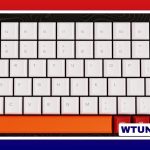
A single-key keyboard is an input device built around one physical control. That may sound too limited for meaningful computer interaction, but a single button can support far more than one command when it is combined with timing, scanning interfaces, menus, and software mapping. If you're exploring a single-key keyboard, consider how alternative keyboard layouts affect ergonomics and functionality.
Rather than assigning one key to each letter or action, a single-key system interprets how and when the control is used. The result is a compact interface suited to accessibility equipment, embedded products, creative controllers, and situations where a conventional keyboard would be impractical.
What is a single-key keyboard?
A single-key keyboard, also called a one-key keyboard or one-button input device, contains one primary actuator for sending signals. The actuator may be a mechanical switch, a capacitive control, a pressure-sensitive input, or another simple sensor.
The device itself usually sends a basic input event. Hardware firmware or companion software then decides what that event means. For example, a system might distinguish between:
- A short press to select an option
- A double press to perform a second action
- A long press to activate a different mode
- A sequence of presses to enter a command
Some systems use the button as part of a scanning interface. Options are presented one after another, and the user presses the control when the desired option is highlighted. This allows one physical input to operate menus, communication tools, and other software-driven interfaces.
How the input is interpreted
With only one physical key, the software layer carries much of the responsibility normally handled by a larger keyboard. A microcontroller, operating-system utility, or dedicated application can translate button events into characters, shortcuts, macros, menu selections, or device commands.
Timing is particularly important. The system must reliably tell the difference between a single press, a repeated press, and a press held for a longer period. Debounce handling is also essential because a physical switch can produce small unintended signal fluctuations when pressed or released. If these events are interpreted incorrectly, the device may trigger the wrong action.
Some designs use USB or Bluetooth to connect with another device, while others process the input within their own embedded hardware. The best arrangement depends on whether the single key is intended to control a computer, a communication aid, an appliance, or a custom electronic system.
Accessibility and assistive technology
One of the most important uses for a single-key keyboard is providing computer access for people who cannot operate a standard keyboard easily. A large keyboard may require precise movement, repeated reach, or the ability to coordinate several keys. A single accessible switch can reduce the physical demands of interaction.
In switch-scanning systems, software moves through choices in a predictable sequence. The user activates the switch when the required letter, word, button, or command appears. The same principle can support: Those exploring a single-key keyboard may also compare black and red options for more expressive gaming setups.
- Text entry and communication interfaces
- Speech-generating devices
- Computer navigation
- Environmental control systems
- Selection-based menus
This approach does not make every task faster than conventional typing. Its value is that it can make interaction possible when using many keys is difficult or impossible. The design must therefore reflect the individual user’s motor abilities, preferred timing, and communication needs.
Embedded, industrial, and minimalist controls
A one-key interface can also be useful when a product needs a small, robust, or easy-to-understand control surface. Simple devices, kiosks, prototypes, wearable equipment, and specialized control panels may use a single button together with menus or predefined operating states.
Reducing the number of physical controls can simplify the enclosure and reduce the number of components that need to be maintained. It may also make the interface easier to clean or use in environments where a full keyboard would be inconvenient. The tradeoff is that the software must clearly communicate the current mode and the result of each press.
Creative and performance uses
Single-key controllers can provide focused access to one important action. A musician might use one as a trigger for a loop or effect, while a performer or technician could map it to a lighting, audio, or multimedia cue. A button placed where it can be activated quickly—such as on a footswitch—can keep attention on the performance rather than on a larger control panel.
Because the input can be mapped to a macro or sequence, one press does not have to correspond to one simple operation. However, the mapping should be designed carefully so that accidental presses do not produce disruptive results.
Advantages and limitations
A single-key keyboard may be appropriate when simplicity, compactness, accessibility, or reliable focused control matters more than conventional typing speed.
- Advantages: small physical footprint, simple hardware, fewer physical controls, and compatibility with scanning or customized input methods.
- Limitations: a learning curve, dependence on software interpretation, possible delays during scanning, and reduced efficiency for general text entry.
For everyday writing and broad computer use, a conventional keyboard will usually provide more direct access to commands and characters. A single-key design is better understood as a specialized interface rather than a universal replacement.
Choosing or designing a single-key solution
Start with the task, not the hardware. Decide whether the user needs selection, text entry, command triggering, or control of a particular device. Then consider the required press types, feedback, connection method, mounting position, and software mapping.
A successful design makes the available states understandable and ensures that the system responds consistently. When those details are handled well, one physical key can provide a practical and adaptable interface despite its minimal size.