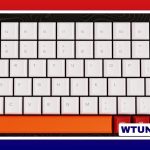
A key well keyboard places its keys inside a curved or recessed surface rather than arranging them on a flat plane. The shape is designed to follow the natural position of the hands, bringing frequently used keys within easier reach and reducing the amount of stretching needed across the rows. Explore how the Key Well Keyboard adapts to different layout and size options for varied typing preferences.
Key wells are one approach within the wider field of ergonomic keyboard design. They can be combined with split layouts, columnar arrangements, sculpted keycaps, thumb clusters, tenting, and compact or full-size formats. The right choice depends less on the label and more on how well the keyboard matches your hands, workspace, and daily typing habits.
What is a key well keyboard?
In a conventional keyboard, the keys generally sit on a flat or gently curved surface. A key well keyboard instead uses a basin-like shape, with the keytops positioned at different heights and angles. The fingers rest closer to the home area, while the surrounding keys follow the hand’s natural arc.
The well may be shallow and subtle or deep enough to create a strongly sculpted typing area. Some designs use conventional staggered rows, while others use straight columns or unconventional thumb and modifier arrangements. The central idea remains the same: shape the keyboard around the hands instead of requiring the hands to adapt to a flat rectangle.
How key wells differ from other ergonomic designs
Several keyboard styles can overlap with the key well concept, but they address different aspects of keyboard geometry:
- Contoured keyboards: These curve the key surface to account for finger length and hand movement. A key well is a particularly pronounced form of this approach.
- Split keyboards: These separate the left and right sections so each half can be positioned independently. A split keyboard may be flat, tented, or built with a separate well on each side.
- Columnar keyboards: These arrange keys in vertical columns rather than using the traditional staggered pattern. The arrangement can work well with a well because each finger has a more direct column of keys.
- Tented keyboards: These raise the inner edges of the two halves, changing the angle of the hands. Tenting and key wells can be used together.
- Portable split keyboards: These prioritise transport and flexible positioning. They may use detachable cables, folding parts, or a shallow sculpted surface instead of a large fixed enclosure.
A “slit” or channel between sections is another possible construction detail, but it does not automatically make a keyboard a key well design. The important feature is the three-dimensional arrangement of the keys.
Layouts and sizes
Key well construction is independent of the number of keys. A compact 60 percent or 65 percent board can use a well to save desk space while relying on layers for function keys, navigation, and other commands. A tenkeyless model may retain a more familiar layout without a dedicated number pad, while a full-size version can include separate function and number sections. For a softer aesthetic and expanded typing options, explore this creamy keyboard layout with an integrated number pad.
Before choosing a size, consider which keys you use regularly. Programmers may want convenient access to symbols, modifiers, and programmable layers. Writers may prefer a familiar letter layout with easily reached punctuation. Data-entry work can make a dedicated number pad more important. A smaller keyboard leaves more room for a mouse and is easier to transport, but it may require more layers or remapped keys.
Potential advantages and trade-offs
The curved surface can reduce the distance fingers travel to outer keys and may make the hands feel more supported during long typing sessions. Split versions also allow the two halves to move farther apart, which can suit users who prefer a wider shoulder position. Sculpted thumb keys can reduce the need to overload the little fingers with modifiers and shortcuts.
These benefits come with a learning curve. A deep well can make unfamiliar keys difficult to locate by touch, and a nonstandard layout may require practice before typing speed returns. The enclosure can also be larger or heavier than a flat compact keyboard, making it less convenient to carry. Replacement keycaps, cases, and other accessories may be more limited for unusual designs.
Features to evaluate before buying
- Well depth: A shallow curve is easier to adapt to, while a deeper well provides more shaping but may require greater adjustment.
- Layout: Check the position of modifiers, arrows, navigation keys, number keys, and frequently used shortcuts.
- Split adjustment: If the keyboard has separate halves, look at the available spacing, rotation, and tenting options.
- Keycap profile: Sculpted or varied-height keycaps can complement the well, but they also affect feel and replacement options.
- Programming support: Layers and remapping are useful when a compact or unconventional layout omits familiar keys.
- Portability: For travel, consider weight, detachable cables, folding mechanisms, and whether the keyboard needs a special case.
- Desk compatibility: Measure the available space and check whether the keyboard’s height or angle works with your chair and desk.
Building a comfortable setup
A key well cannot compensate for every workstation problem. Position the keyboard so your shoulders can remain relaxed and your forearms are broadly level with the desk. Adjust the chair and monitor as needed, and avoid using a wrist rest in a way that forces the palms upward or places pressure on the wrists.
Give yourself time to adapt, especially when moving from a flat keyboard to a deep well or a split layout. Start with short sessions, make small positional adjustments, and pay attention to comfort rather than trying to maximise speed immediately. A key well keyboard is most useful when its layout and geometry fit your actual workflow.