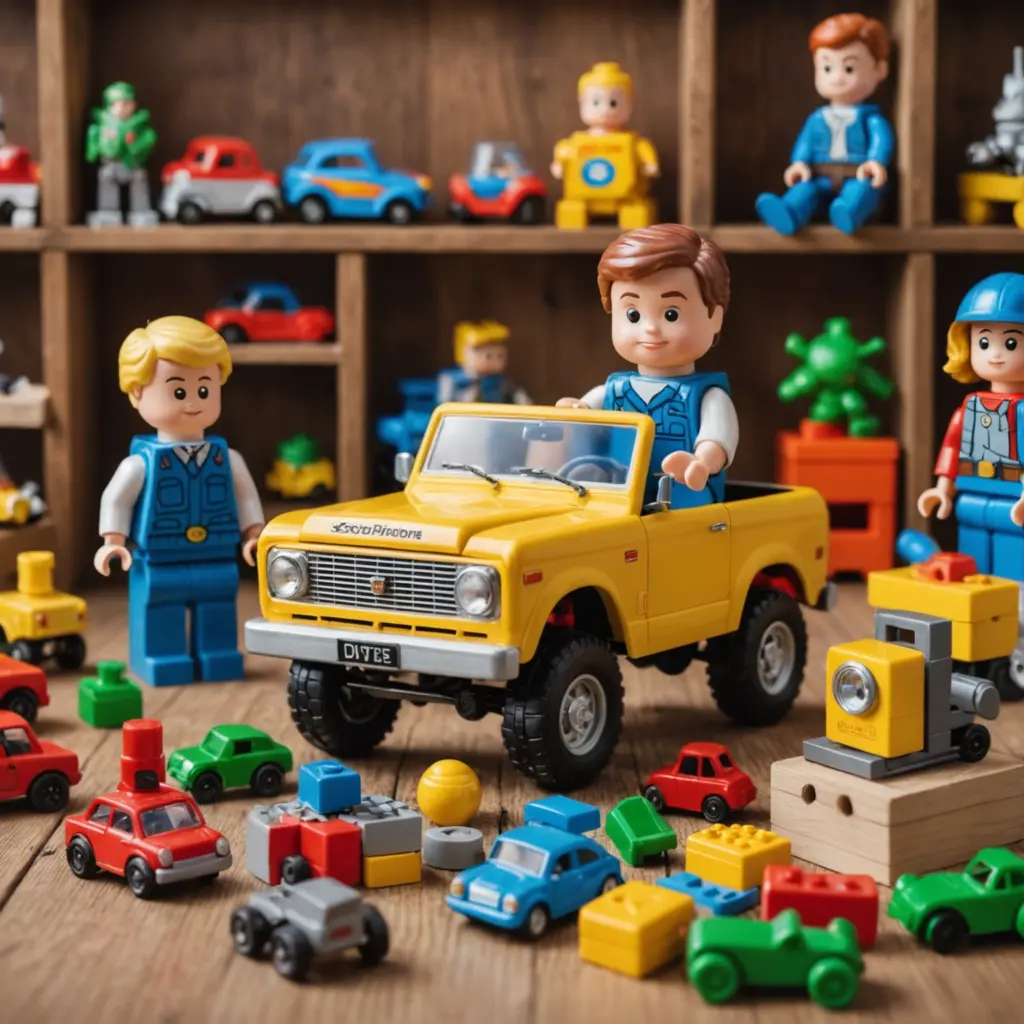
Classic toys from the 1960s and 1970s continue to attract attention long after their original heyday. An Etch A Sketch, a Barbie doll, a set of LEGO bricks, or a collection of Hot Wheels cars can be more than an object from the past. For many people, these toys are reminders of childhood, family, creativity, and a style of play that did not depend on screens or constant updates.
Their lasting appeal is not based on nostalgia alone. Classic toys often invite open-ended play, carry strong cultural associations, and create opportunities for people of different generations to share experiences. That combination helps explain why they remain meaningful as toys, keepsakes, and collectibles.
They bring childhood memories back to life
Few objects connect adults to the past as immediately as a familiar toy. The shape of a Barbie doll, the sound of a Fisher-Price chatter telephone, or the feel of LEGO pieces can bring back memories that may otherwise remain in the background. These sensory details make classic toys powerful memory triggers.
The memories attached to them are often specific and personal: receiving a favorite toy as a gift, playing with friends after school, or spending time with parents and siblings. The toy becomes connected to the experience surrounding it, not just to the act of playing. Seeing it again can therefore produce a strong sense of comfort and recognition.
Classic toys encourage imagination
Many enduring toys provide a starting point rather than a single prescribed activity. Building bricks can become a house, vehicle, or imaginary city. Dolls and action figures can take part in stories invented by the child. An Etch A Sketch can produce a picture, be erased, and become something entirely different.
This flexibility gives children room to experiment and direct their own play. Instead of simply following a fixed sequence, they can create characters, solve problems, combine toys, and change the rules. Adults may remember this freedom as one of the defining pleasures of their childhood, while children encountering these toys for the first time can discover the same possibilities in their own way.
They have become symbols of their era
Some toys outgrow their original purpose and become cultural icons. Barbie, Hot Wheels, LEGO, and other familiar names are associated not only with play but also with the design, advertising, entertainment, and family life of the period in which they became popular.
That cultural significance gives vintage toys another layer of interest. A collector may value a toy for its appearance or rarity, while someone else may appreciate what it represents about a particular decade. The appeal can be historical, aesthetic, emotional, or a mixture of all three.
Shared play strengthens family connections
Classic toys can help bridge the distance between generations. Parents and grandparents may introduce children to toys they enjoyed themselves, explaining how they played with them and sharing stories connected to them. Children, in turn, may create new games and memories with the same objects.
Playing together also creates natural opportunities for communication and cooperation. Families might build with LEGO bricks, play a board game, stage imaginative scenes with dolls, or compare different toy collections. These activities encourage conversation and give family members time to focus on one another.
Over time, a well-loved toy can become part of a family tradition. Keeping it safe, bringing it out for a special occasion, or passing it to another generation gives the object meaning beyond its original use.
Durability adds to their appeal
Classic toys are often remembered as sturdy, carefully made objects. Examples that use substantial materials, solid construction, or attention to small details may survive years of play and storage. When a toy remains in good condition decades later, its physical longevity reinforces the emotional connection people have with it.
Durability also makes a toy easier to reuse and pass along. A toy that can support several generations of play may feel more valuable than one designed for a short period of interest. Its continued use can reduce the need to replace it and adds to its sense of family history.
Why collectors seek them out
Not every old toy is rare, but scarcity can increase interest in particular examples. Toys may become difficult to find because they were discontinued, produced in limited numbers, or simply lost or damaged over time. Collectors often look for items with their original features and strong overall condition.
Online communities and marketplaces have also made it easier for enthusiasts to learn about, display, buy, sell, and trade vintage toys. Some collectors focus on a specific brand, character, vehicle, or decade. Others enjoy the search itself and the challenge of preserving objects linked to popular culture.
More than objects from the past
The affection for classic toys from the 1960s and 1970s comes from several sources at once. They recall personal memories, support imaginative play, connect families, and reflect the culture of their time. When they are durable enough to survive across decades, they can become treasured links between childhood and adulthood.
That is why these toys continue to matter. They are not simply relics of an earlier market. For many people, they are reminders of how play felt, who shared it with them, and how a simple object could inspire a lasting story.

Clare Hobson is a university-trained tech game developer with a passion for creating immersive gaming experiences that blend cutting-edge technology with compelling storytelling.