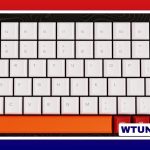
Older keyboards are often dismissed as obsolete, yet many remain useful, distinctive, and enjoyable to use. Their value is not limited to nostalgia. A vintage keyboard may offer a layout that shaped modern designs, a switch mechanism with a character rarely found in inexpensive contemporary models, or a level of construction that makes it suitable for continued daily use. Examining older keyboard layouts helps explain how key sizes and spacing changed over time.
Whether you are a typist, collector, retro-computing enthusiast, or simply curious about keyboard design, older models provide a practical way to explore how computer input devices developed. They also show why keyboard layouts and sizes are not as uniform as they may first appear.
Why older keyboards remain interesting
Manufacturers of earlier keyboards often placed greater emphasis on durability, serviceability, and experimentation. Some models were made with substantial frames, metal backplates, thick keycaps, or switches designed to withstand extensive use. As a result, a keyboard that is several decades old may still have a solid feel and a distinctive typing response.
Older designs can also reveal the priorities of the systems for which they were made. A keyboard intended for a terminal, office computer, or early personal computer may arrange its keys differently from a current laptop or compact mechanical board. Studying those differences helps explain how familiar modern arrangements developed—and why alternative layouts continue to appeal to some users.
Layouts and keyboard sizes
Vintage keyboards came in a broad range of physical formats. Full-size boards with a dedicated numeric keypad were common, but compact terminals and specialized systems often omitted keys or placed them in unusual groups. Function keys might appear in large banks, while arrow keys and navigation controls could be positioned differently from the arrangement many people now expect.
Older keyboards may use ANSI, ISO, or regional formats such as JIS. These standards can differ in Enter-key shape, modifier-key sizes, punctuation placement, and the number or location of certain keys. A layout may therefore affect both muscle memory and the ease of configuring the keyboard for a modern operating system.
Before buying or restoring an older model, check more than its overall size. Note the physical layout, keycap profile, connector, and whether important keys are present. A board that looks like a familiar full-size keyboard may still require remapping if its legends and key positions do not match your normal workflow.
Switches and typing feel
The switch is one of the main reasons people seek out older keyboards. Buckling spring switches, associated with the IBM Model M, are known for pronounced tactile feedback and a strong click. Alps switches and other early mechanical designs offer different tactile responses, while capacitive switches used in some high-end systems are valued for a smoother feel.
Not every older keyboard is mechanical. Earlier membrane-based designs can feel quite different from one another, and their response may not resemble that of modern rubber-dome boards. The best choice depends on personal preference, working environment, and tolerance for sound. A switch that feels excellent during a short test may be less suitable for a quiet shared space or a long typing session. Exploring earlier keyboard designs can clarify how dedicated number pads shaped familiar typing layouts.
Connecting an older keyboard to a modern computer
Compatibility involves both the connector and the keyboard’s communication protocol. Older models may use DIN, AT, or PS/2 connections rather than USB. Adapters and active converter boxes can bridge many of these connections, although the results vary by keyboard and converter.
Some boards also use different scan-code behavior or unusual key assignments. After connecting one, you may need to remap keys through the operating system or keyboard software. Certain features, including rollover behavior or special function layers, may not transfer perfectly through every adapter.
- Identify the connector before purchasing an adapter.
- Confirm whether the keyboard needs an active converter rather than a simple pin adapter.
- Test every key, including modifiers and function keys.
- Plan for remapping if the physical layout differs from your normal keyboard.
Practical uses today
A well-preserved older keyboard can serve as a daily writing or programming tool if its layout and typing feel suit you. Its durable construction may also make it useful in a demanding workspace. Collectors may display models with unusual layouts, keycap profiles, or switch mechanisms, while retro-computing enthusiasts use period-appropriate keyboards with older systems.
There is no requirement to use a vintage keyboard exactly as it was originally intended. With suitable connectivity and careful remapping, it can become part of a modern workstation. The important considerations are comfort, reliability, noise, and whether replacement parts or repair knowledge are available.
Cleaning, restoration, and storage
Start maintenance with careful cleaning. Remove dust and clean keycaps appropriately, taking care not to damage labels or delicate components. If the design permits it, worn stabilizers, keycaps, springs, or switches may be replaceable. Lubrication can improve some mechanisms, but it should only be used when suitable for the particular switch and restoration goal.
Collectors may consider original condition, unusual layouts, working switches, documentation, and the availability of replacement parts when evaluating a keyboard. Avoid exposing stored equipment to extreme humidity or harsh conditions. Preserve original components where possible, and document any modifications so the keyboard’s history is not lost.
A useful piece of keyboard history
Older keyboards combine practical function with evidence of changing computer design. Their layouts show how standards evolved, while their switches and construction demonstrate approaches that are still appreciated by modern users. With the right adapter, modest maintenance, and realistic expectations about compatibility, many older keyboards can remain useful rather than merely decorative.