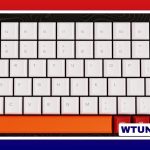
The Naya keyboard range is aimed at people who want more flexibility than a basic office keyboard without moving immediately into the complexity of a fully custom mechanical build. Across its different configurations, the range combines modern styling, several switch choices, customization features, and wired or wireless connectivity. The exact specifications vary by model, so buyers should check the individual configuration before making a decision.
Design and layout options
Naya keyboards use a clean, contemporary design with a relatively slim profile. Depending on the version, the case may use an aluminum top section, reinforced plastic, or a combination of materials. These choices affect the overall weight, rigidity, and price, but the intended result is a keyboard that feels more substantial than a basic membrane model without becoming unnecessarily bulky.
Layout choice is one of the most important differences within the range. A tenkeyless version removes the numeric keypad, leaving more room for mouse movement and creating a more compact desk setup. A full-size model retains the number pad for spreadsheets, data entry, and other tasks where dedicated navigation and numeric keys are useful.
- Tenkeyless layouts: useful for smaller desks, programming, writing, and gaming setups.
- Full-size layouts: better suited to office work and frequent numeric input.
- Keycap options: some configurations use laser-etched legends, while higher-tier versions may use double-shot keycaps for improved resistance to wear.
Switches and everyday typing
The typing feel depends largely on the selected switch. Naya models are described as being available with tactile, linear, and clicky options, allowing users to choose between noticeable feedback, smooth keystrokes, or an audible click. This is more useful than treating the keyboard as a single product, because two versions with the same case can feel and sound quite different.
Some models are hot-swappable. This allows switches to be changed without soldering, making the keyboard a practical starting point for people who want to experiment with key feel or acoustics. It also provides a way to replace individual switches later rather than replacing the entire keyboard.
Higher-end configurations may include tuned or pre-lubricated stabilizers for larger keys such as the spacebar and Enter key. Internal foam is also used on selected models to reduce hollow resonance. These details can make the board sound more controlled, although the final result will still depend on the switch, keycaps, desk surface, and typing style.
Customization and software
The companion software, where supported, is intended to cover the main customization tasks: remapping keys, creating macros, managing profiles, and configuring lighting. Selected models include per-key RGB lighting with preset effects and more detailed control over individual keys.
Onboard profile storage is useful for anyone who moves between computers. It can preserve selected settings on the keyboard itself, reducing the need to reinstall software every time the device is connected to another workstation. Basic keyboard operation does not depend on using the application, which is helpful for people who prefer a simpler setup or do not need macros and advanced lighting.
Wired and wireless connectivity
USB-C wired operation is the straightforward choice for a stable connection and low latency. It is particularly appropriate for desktop work and gaming, where users may prefer not to manage battery levels.
Wireless versions add Bluetooth connectivity for use with laptops, tablets, and phones. This can make the keyboard more practical in a mixed-device workspace. Battery endurance varies with the model and with settings such as lighting and polling rate; wireless buyers should therefore treat any stated runtime as configuration-dependent rather than universal.
Basic typing and media controls are described as compatible with Windows, macOS, Linux, iOS, and Android. Advanced software functions may not be identical across platforms, so compatibility details deserve attention if macros, remapping, or saved profiles are central to the purchase.
Who should consider a Naya keyboard?
The range is best suited to users who want a ready-to-use mechanical-style keyboard with room for personalization. Writers and editors may prefer a tactile switch and a comfortable full or compact layout. Programmers can benefit from a tenkeyless design that leaves more space for the mouse. People who work with figures may find the full-size version more convenient.
For gaming, wired operation and rollover support are relevant advantages, while switch choice determines much of the responsiveness and sound. In shared offices or home workspaces, a quieter tactile or linear configuration is likely to be more appropriate than a clicky one.
Value and buying considerations
Naya’s appeal comes from offering different levels of equipment rather than forcing every buyer into the same feature set. Entry configurations can provide a relatively simple keyboard, while more advanced versions add hot-swappable sockets, improved stabilizers, lighting, wireless connectivity, or expanded software controls.
Before choosing, compare the exact model’s layout, switch type, connectivity, keycap construction, operating-system support, and whether it includes hot-swap capability. Overall, the Naya keyboard is a sensible option for users seeking a balance between convenience and customization. It is especially attractive to buyers who want a polished keyboard immediately but may still want to experiment with switches, profiles, or lighting later.