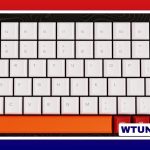
An industrial keyboard is built for workplaces where a standard office keyboard would be unreliable. Manufacturing lines, outdoor kiosks, medical stations, transport systems, and equipment consoles may expose input devices to dust, moisture, oils, cleaning chemicals, vibration, temperature changes, or constant use. Industrial keyboards address these conditions through sealed construction, durable materials, long-life switches, and application-specific mounting and connectivity options.
What makes a keyboard industrial?
Industrial keyboards are designed around three priorities: environmental resistance, service life, and integration. Their housings and key surfaces are made to withstand demanding conditions, while their switches are selected for repeated operation over long periods. Many models also support installation directly into a panel, console, cabinet, kiosk, or mobile workstation.
Unlike a typical consumer keyboard, an industrial model may include a sealed faceplate, an integrated pointing device, backlighting, programmable keys, or a layout tailored to a particular machine. The right design depends on how the keyboard will be used, cleaned, mounted, and connected.
Important industrial keyboard features
Sealing and ingress protection
Ingress Protection, or IP, ratings indicate how effectively an enclosure resists solids and liquids. Ratings such as IP65 and IP67 are commonly considered when a keyboard must operate in dusty, wet, or washdown environments. The exact rating required depends on the exposure and the manufacturer’s testing details.
Sealing may be achieved with molded silicone or elastomer overlays, gasketed housings, sealed key assemblies, or stainless-steel faceplates. These designs help keep contaminants away from the electronics while preserving usable key travel and feedback. A high IP rating should be matched to the actual cleaning process rather than treated as a substitute for application-specific testing.
Switch and input technologies
Different switch types provide different balances of feedback, cleanability, and durability:
- Mechanical switches: Provide distinct tactile or audible feedback and are suited to applications where operators need precise key response.
- Silicone membrane designs: Offer a sealed surface that is easy to wipe down and can be appropriate for wet or contamination-sensitive areas.
- Capacitive and projected-capacitive input: Provide a smooth surface and may support operation in designs intended for gloved use, depending on the specific product.
Switch specifications should be reviewed alongside the expected actuation rate, cleaning chemicals, and required key feel. A design that works well in a control room may not be suitable for a frequent washdown environment.
Materials and rugged construction
Stainless steel is widely used for faceplates and complete keyboard housings because it offers strength and resistance to corrosion and cleaning agents. Polycarbonate and reinforced ABS can provide a lighter alternative with impact resistance. Some keyboards also use conformal coatings or other protective methods to help shield internal circuit boards from moisture, vibration, and contaminants.
Mounting style is another part of the mechanical design. Flush-mount, panel-mount, and tray-mount configurations allow the keyboard to be incorporated into operator consoles, equipment cabinets, carts, kiosks, and other restricted spaces.
Cleanability and specialized environments
Healthcare, food production, and other hygiene-sensitive workplaces may require keyboards that tolerate frequent disinfection. Stainless steel, sealed polymers, smooth overlays, and antimicrobial treatments can support regular cleaning, but compatibility with the facility’s disinfectants should always be confirmed before purchase.
Applications involving outdoor exposure, vehicles, or heavy machinery may place greater emphasis on resistance to shock, vibration, temperature changes, and moisture. Environments with potentially hazardous atmospheres require products with the relevant certifications and safety ratings for that location; a general-purpose sealed keyboard should not be assumed to meet those requirements.
Connectivity and integrated controls
USB is common for modern industrial installations, while PS/2 and RS-232 may still be needed for legacy machinery and specialized equipment. Detachable cables can simplify maintenance, and some designs use locking or rugged connectors where accidental disconnection is a concern.
Space-saving models may combine the keyboard with a trackball, touchpad, joystick, or other pointing control. This can reduce the number of openings and peripherals in a sealed enclosure. Most basic keyboards operate as standard HID devices, but programmable keys, custom scan codes, secure logon functions, and other specialized features may require configuration software or drivers.
How to choose the right industrial keyboard
Start by documenting the operating environment and the tasks users perform. Consider:
- Exposure to dust, water, oils, chemicals, or repeated washdown
- Required IP rating and any industry-specific certifications
- Shock, vibration, temperature, and outdoor-use conditions
- Preferred switch feel, key layout, language, and legends
- Need for backlighting, programmable keys, or an integrated pointing device
- Available panel space and the required mounting method
- USB, legacy, detachable, or locking cable connections
- Spare parts, customization, and long-term vendor support
Purchase price is only one part of the decision. A keyboard that lasts longer, reduces replacement work, and remains reliable during production or patient care may offer better overall value than a less expensive consumer product. Matching the construction, protection rating, controls, and connectivity to the application is the best way to achieve dependable industrial input.