A Hall effect mechanical keyboard detects key movement with magnets and Hall effect sensors instead of relying on conventional metal contact points. This contactless design gives these keyboards a distinctive combination of smooth operation, adjustable input behaviour and potentially long service life.
Hall effect boards are especially interesting to people who spend long hours typing, want more control over actuation, or enjoy experimenting with keyboard firmware. They are available in layouts ranging from full-size models with a number pad to compact 75% designs, as well as wired and wireless configurations.
What is a Hall effect mechanical keyboard?
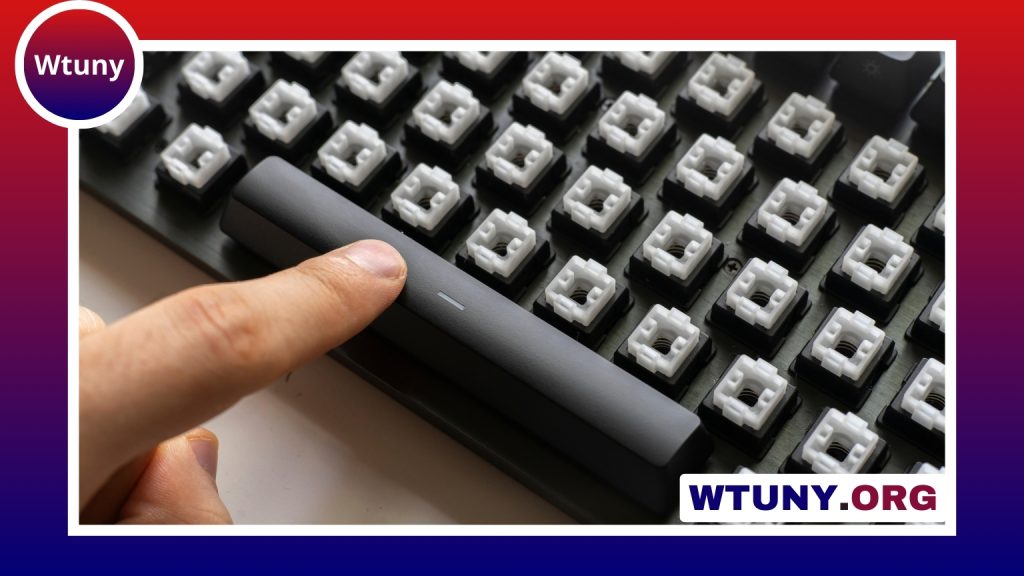
In a conventional mechanical keyboard, pressing a key moves a switch until its electrical contacts connect and register the input. A Hall effect keyboard uses a different method. A small magnet is attached to or moved by the switch, while a Hall effect sensor on the keyboard’s circuit board measures changes in the surrounding magnetic field.
As the key is pressed, the magnet moves relative to the sensor. The sensor reports that change to the keyboard’s controller, which determines when the key should register. Since the electrical signal does not depend on two metal contacts touching, the switch’s sensing mechanism is contactless.
How Hall effect switches work
The sensor can detect more than a simple pressed-or-released state. It can read the magnet’s position through part of the key’s travel, allowing compatible keyboards to respond to different points in that movement. The practical capabilities depend on the switch, controller and firmware, but may include:
- Adjustable actuation: The registration point can be configured in software on supported keyboards.
- Rapid re-triggering: Some designs can reset and register inputs based on key position rather than a fixed mechanical contact event.
- Analog-style input: Certain implementations can use the key’s travel for variable control rather than treating it only as on or off.
- Contactless sensing: The part responsible for detecting the press does not depend on conventional electrical contact surfaces.
These features are not automatic guarantees of every Hall effect keyboard. Before buying, check exactly what the board’s firmware supports and whether those controls are available in the operating systems or applications you use.
Advantages for typing and gaming
One major attraction is consistency. Because key registration is based on magnetic sensing, there is less dependence on contact surfaces that can wear, corrode or produce unwanted electrical behaviour. This can make a Hall effect switch keyboard appealing to heavy typists, programmers and anyone who uses a keyboard for extended periods.
Gaming is another common use case. Adjustable actuation can let a player choose how far a key must travel before it registers, while position-based sensing may support specialised controls in compatible games. These features can also be useful for creative software or other applications that benefit from variable input.
However, a Hall effect board is not automatically faster or better than every conventional mechanical keyboard. Overall responsiveness also depends on the controller, firmware, connection method and software. Users who prioritise predictable competitive performance may still prefer a wired model with a well-implemented high-polling-rate configuration.
Layouts and wireless options
A full-size Hall effect keyboard is suitable for users who regularly enter numbers or need a dedicated number pad. It normally retains the function row, navigation keys and other standard sections, but takes up more desk space.
A 75% Hall effect keyboard removes some spacing and seldom-used keys while keeping the function row and arrow keys. It is a practical compromise for a smaller workstation without moving as far toward minimalism as a 60% layout.
Wireless Hall effect keyboards can be convenient for flexible desk setups, but wireless operation introduces additional design trade-offs. Battery life, connection mode, polling behaviour and firmware efficiency all matter. A wireless model should therefore be judged on its complete implementation rather than on the switch technology alone. Wired operation remains a straightforward choice when consistent power and responsiveness are the priority.
Potential drawbacks
Hall effect keyboards occupy a more specialised part of the mechanical keyboard market. They may cost more than familiar contact-based boards, and the choice of compatible switches, keycaps, software and replacement parts can be narrower. The typing feel may also differ from the mechanical switches a user already knows, so specifications alone cannot predict whether a particular board will feel comfortable.
Software support is important as well. Adjustable actuation and advanced input modes are useful only when the keyboard’s firmware and configuration tools expose them reliably. Some users may prefer the simplicity and broad compatibility of a traditional mechanical keyboard.
How to choose one
- Choose the layout first: Select full-size if you need a number pad, or a 75% design if desk space matters more.
- Check the sensing features: Confirm whether actuation adjustment, re-triggering and analog-style input are actually supported.
- Consider the connection: Wired is uncomplicated; wireless is more flexible but requires attention to battery life and latency.
- Evaluate the feel: Look for information about key travel, spring weight and available switch options.
- Review the software: Make sure remapping and calibration tools suit your computer and preferred workflow.
- Inspect the build: Case construction, stabilisers, keycaps and the availability of replacement components all affect long-term satisfaction.
Are Hall effect keyboards worth it?
They can be a strong choice for users who value contactless sensing, configurable actuation and the possibility of advanced input behaviour. Heavy typists, gamers, programmers and keyboard enthusiasts are the most likely to benefit from those characteristics. For someone who simply wants a dependable keyboard at the lowest cost, a conventional mechanical design may be more practical.
The best Hall effect mechanical keyboard is therefore the one whose layout, switch feel, firmware features and connection method match the way you work or play. The technology offers meaningful advantages, but its value depends on how often you will use the added control.