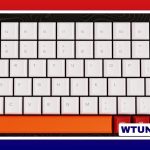
TMR keyboards use magnetic sensing to detect key movement, offering an alternative to conventional mechanical switch designs. For the right user, this technology can provide consistent actuation, reduced contact-related wear, and advanced input customization. However, the sensor itself is only part of the overall experience. Firmware, connectivity, construction, stabilizers, and key feel all influence whether a keyboard performs well in everyday use.
What is a TMR keyboard?
TMR stands for tunneling magnetoresistance. In a TMR switch, a sensor detects changes in the magnetic field produced by a magnet built into the switch mechanism. The keyboard converts that movement into an electrical signal without relying on traditional metal contacts to register a keypress.
This contactless approach removes a common source of mechanical wear and can produce repeatable actuation behavior over extended use. Depending on the keyboard’s design and software, TMR sensing may also support adjustable actuation points or analog-style input rather than a single fixed on/off threshold.
Why TMR technology matters
A keyboard’s responsiveness depends on more than its switch type. Scanning behavior, firmware, USB polling, signal processing, and wireless transmission can all affect the time between pressing a key and the computer receiving the input.
TMR switches can offer a clean sensing method that requires less reliance on conventional debounce handling. When paired with well-tuned firmware and a suitable polling rate, this may help create a highly responsive keyboard. Wired USB operation generally remains the straightforward choice for minimizing variables, while wireless users should look for a dedicated low-latency mode.
Consistency is another potential advantage. Because the keypress is detected magnetically rather than through physical electrical contacts, the actuation behavior can remain predictable as the keyboard is used. The quality of the implementation still matters, so a TMR label should not replace practical testing or measured reviews.
Features to compare before buying
Adjustable actuation
Adjustable actuation lets you decide how far a key must travel before it registers. A shorter setting may suit fast repeated inputs, while a deeper setting can reduce accidental presses during normal typing. Look for software that allows settings to be changed per key if you need different behavior for movement keys, modifiers, or frequently used shortcuts.
Firmware and software
The keyboard’s firmware determines how much control you have over the sensors. Useful features can include:
- Per-key remapping
- Macro support
- Adjustable actuation points
- Multiple profiles
- Configurable rapid or repeated input behavior, where supported
Reliable software is especially important because advanced sensing features are only valuable if they are easy to configure and behave consistently.
Connection and polling
A wired connection is usually the simplest option when response time is the main priority. If you prefer wireless use, examine how the keyboard handles latency in its different connection modes rather than assuming every mode performs identically. Polling rate is another specification to compare, although it should be considered alongside firmware quality and the complete input path.
Build and typing feel
Magnetic sensing does not determine whether a keyboard feels comfortable or sounds good. Check the case construction, plate, stabilizers, keycap material, layout, and available adjustments. A keyboard intended for long typing sessions should feel stable and predictable, while a gaming-focused model may place greater emphasis on compact layouts and quick configuration.
Who should consider a TMR keyboard?
Competitive players may value the combination of responsive sensing and adjustable actuation. These features can make it easier to tailor key behavior to a particular game or control scheme.
TMR keyboards can also suit people who want a durable daily keyboard with consistent key registration. Streamers, creators, and other heavy users may appreciate a design that avoids some forms of contact wear. For typing-focused users, however, comfort, acoustics, layout, and key feel should carry as much weight as sensor technology.
Adjustable actuation and analog-capable input may also be useful for some accessibility needs, particularly when a user benefits from more control over how key movement is interpreted. The usefulness of these features depends on the individual and on the keyboard’s software support.
How to choose the best TMR keyboard for you
Start by deciding what matters most: the lowest practical input delay, a reliable daily typing experience, or extensive customization. For competitive gaming, prioritize wired operation, responsive firmware, configurable actuation, and independently measured latency. For general use, give greater attention to layout, key feel, stabilizer quality, sound, and software reliability.
Before buying, check whether replacement parts and compatible switches are available, especially if the model uses a specialized magnetic design. If possible, try the keyboard in person or read reviews that discuss both typing comfort and measured performance. TMR technology can be compelling, but the best choice is the keyboard whose complete design matches your priorities—not simply the one with the newest switch label.