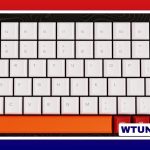
AULA mechanical keyboards are aimed at users who want a compact layout, mechanical switches, RGB lighting, and a feature set that is more extensive than a basic office keyboard. The range includes wired and wireless models, with the AULA F75, F75 Pro, and F85 offering different approaches to desk space, connectivity, and customization. Check the Aula keyboard models section for brand-specific compatibility and mainstream model recommendations before upgrading.
Because specifications can vary between versions and retailers, the model name alone is not always enough to identify the exact keyboard. Switch type, hot-swap support, keycap material, wireless modes, and included accessories should all be checked before buying.
What makes AULA keyboards different?
AULA focuses on compact mechanical keyboards with a gamer-oriented visual style. Many models use bright RGB lighting, decorative case elements, and layouts designed to preserve commonly used keys while reducing the keyboard’s footprint. This makes them suitable for gaming desks, home offices, student workspaces, and secondary setups.
The brand also offers an accessible entry point for people moving from a membrane keyboard to a mechanical one. Depending on the particular model, buyers may get features such as programmable functions, multimedia shortcuts, multiple connection options, or hot-swap switch sockets without choosing a larger premium keyboard.
AULA F75: compact without giving up the function row
The AULA F75 uses a 75 percent layout. This arrangement is smaller than a full-size keyboard but generally keeps the function row and a dedicated navigation cluster. It is a practical compromise for people who want to save desk space without relying heavily on function-layer shortcuts.
The F75 is available in different configurations and colorways, including an AULA F75 black variant. Wired editions are suited to users who prefer a straightforward connection and do not need a battery or wireless pairing. Depending on the listing, the keyboard may be offered with different switches, keycaps, or upgrade features, so specifications should be confirmed for the exact SKU.
AULA F75 Pro: wireless flexibility
The AULA F75 Pro builds on the compact F75 format with versions designed for wireless use. The AULA F75 Pro wireless mechanical keyboard is described with three connection options: Bluetooth for compatible mobile devices, 2.4 GHz wireless through a USB dongle, and wired USB-C operation.
- Bluetooth: useful when pairing with tablets, phones, or other compatible devices.
- 2.4 GHz wireless: intended for a responsive desktop or gaming connection without a cable across the desk.
- USB-C wired mode: useful for charging or for users who prefer a consistent wired connection.
The F75 Pro is a logical choice for a tidy desk or a setup shared between a computer and mobile devices. Some versions may also include hot-swap sockets, RGB lighting, macros, and multimedia controls. Retailers sometimes shorten the name to “F75 Pro keyboard,” so comparing the detailed specification list is important. For a quieter portable option, compare iPad keyboard alternatives with Aula’s mechanical typing experience and layout customization.
AULA F85: consider it when you want a larger layout
The AULA F85 provides an alternative for buyers who want a layout that is slightly larger than the F75. The exact arrangement can vary by version, but the F85 is generally associated with a tenkeyless or somewhat larger format. That can provide more familiar spacing for users who do not want the tighter footprint of a 75 percent board.
Choose the F85 when layout comfort and additional space matter more than achieving the smallest possible desk footprint. As with the F75 range, check the individual listing for switch options, connectivity, lighting controls, and keycap details.
Typing feel and customization
The typing experience depends primarily on the installed switches, stabilizers, keycaps, and case construction. AULA boards may be supplied with tactile or clicky budget mechanical switches, making them appropriate for casual typing and gaming. However, the sound and feel can differ substantially between configurations carrying a similar model name.
For buyers who enjoy customization, a hot-swap version is worth considering. Hot-swap sockets allow compatible switches to be replaced without soldering. Improved switches, stabilizers, or keycaps can then be used to alter the keyboard’s feel and sound. If long-term customization is a priority, confirm that the specific model includes hot-swap support rather than assuming every F75 or F85 does.
How to choose the right AULA model
- Choose the F75 for a compact wired keyboard that retains the function row.
- Choose the F75 Pro if wireless connectivity, device switching, or a cable-free desk is important.
- Choose the F85 if you prefer a roomier layout and do not need the smallest footprint.
- Look for hot-swap support if you expect to replace switches or experiment with different typing feels.
- Check the exact switch and keycap specification before purchasing, especially when comparing similar listings.
Buying considerations
AULA keyboards are primarily produced and assembled in China, and shipping times, return policies, and warranty support may differ by region and seller. Buying through a reputable retailer can make returns or service simpler. During an AULA F75 sale, compare the discounted model with competing versions rather than assuming every promotion includes the Pro features.
Finally, verify the product photos, SKU, color, switch type, wireless accessories, and software or layout details before ordering. Reviews for the exact version are more useful than general comments about the AULA brand, since different batches and configurations may provide noticeably different experiences.