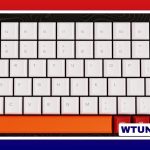
A damaged or missing key does not always mean you need to replace your entire Logitech MX Keys or MX Keys S keyboard. If the problem is limited to one keycap, a compatible replacement may restore both the keyboard’s appearance and its normal feel. The important steps are identifying the actual fault, confirming the replacement matches the low-profile mechanism, and installing it without damaging the scissor assembly.
Check whether the keycap is really the problem
Before ordering MX Keys replacement keys, determine whether the visible damage is separate from an electrical or mechanical fault. A replacement keycap can resolve issues such as:
- A cracked, chipped, or missing keycap
- A worn or unreadable legend
- A key that has come loose from its mounting points
- Discoloration or damage affecting only one key
If the key does not register, first remove obvious debris. Turn the keyboard off, disconnect it, and gently shake it with the keys facing downward. Compressed air can help clear particles around the affected key. Test the keyboard again after reconnecting it.
Several unresponsive keys, an entire row that fails, or a key that still does not work with an intact cap may indicate a problem with the scissor mechanism, membrane, electronics, or connection rather than the keycap itself. In those cases, replacing the cap alone is unlikely to solve the problem.
Choosing compatible MX Keys replacement keys
MX Keys and MX Keys S use low-profile scissor-switch mechanisms. They do not use the same mounting system as conventional mechanical keyboards with Cherry-style stems. Standard mechanical keycap sets are therefore not suitable and may damage the keyboard if forced into place.
When comparing a single key or a complete set, confirm that the listing specifically identifies compatibility with Logitech MX Keys or MX Keys S. Also check the following details:
- Keyboard model: Make sure the part is intended for the exact MX Keys version you own.
- Layout: Letter keys may be interchangeable across layouts, but larger keys and legends can vary between regional versions.
- Mounting system: The keycap must be designed for the Logitech low-profile scissor mechanism.
- Large-key hardware: Spacebar, Shift, Enter, Backspace, and other wide keys may require compatible stabilizer clips or wire fittings.
- Finish and lighting: Aftermarket plastic, legends, backlighting, and texture may not match the original key exactly.
Individual replacements and full kits may appear through third-party marketplaces or specialist keycap sellers. Logitech may also provide repair or warranty options, depending on the keyboard’s circumstances and coverage. If the keyboard is still under warranty, contacting Logitech before opening it is the safer option.
How to remove a damaged key safely
Power off the keyboard and disconnect it before working on any key. For a small key, use a plastic spudger or another thin, non-sharp tool. A small flat screwdriver can be used with care, but covering its tip with tape helps reduce the chance of scratching the keycap.
- Place the tool beneath one edge of the keycap.
- Lift gently until the cap releases from the scissor mechanism.
- Work gradually rather than twisting or pulling forcefully.
- Inspect the scissor clip and its mounting points before installing the replacement.
Large keys need extra care because they commonly use stabilizer hardware. Do not yank a spacebar, Shift, or Enter key straight upward. Release the cap carefully from its clips and stabilizer points, taking note of how the parts are positioned. If the scissor mechanism or stabilizer is broken, a new keycap alone may not be enough.
Installing the replacement key
Compare the replacement with the original before fitting it. The underside should align with the scissor assembly and, where applicable, the stabilizer clips. Position the keycap evenly over the mounting points, then press down gently across its surface until it seats.
Test the key with several light presses. It should sit level with neighboring keys, move smoothly, and return without sticking. If it feels uneven or fails to travel correctly, stop pressing and reseat it. Forcing a misaligned cap can bend the scissor mechanism.
Troubleshooting after replacement
If the new cap is secure but the key still does not register, test the keyboard on another computer to help rule out a connection or software issue. Check key mapping and related Logitech settings where applicable. A persistent fault may involve the switch assembly or internal electronics and may require professional service or keyboard replacement.
Keep the keyboard clean with a soft, slightly damp microfiber cloth and remove loose debris regularly. Avoid spilling liquids and do not use excessive moisture around the keys. When using third-party MX Keys replacement keys, remember that the feel, color, legend quality, and backlighting may differ from the original. If you are unsure which part fits, photograph the keyboard and its model information before contacting the seller or Logitech support.