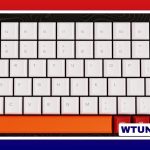
An extended mouse pad, often called a desk mat, provides one continuous surface for your keyboard and mouse. Instead of separating the two onto different materials, it creates a more consistent workspace across a larger section of the desk. The added coverage can improve comfort, reduce keyboard movement, support wider mouse movements, and help protect the desktop from everyday wear.
Why use an extended mouse pad?
A standard mouse pad may provide enough room for basic navigation, but it can feel restrictive if you use low mouse sensitivity or move your arm broadly. An extended model gives the mouse more usable space while also accommodating the keyboard.
The benefits are useful beyond gaming. A large mat can:
- Keep the keyboard and mouse on a consistent surface
- Help reduce keyboard sliding during typing or gaming
- Cushion contact between peripherals and the desk
- Protect the desktop from minor scratches, dust, and small spills
- Give the workstation a more coordinated appearance
It can also make the front of the desk more comfortable by providing a softer surface beneath the hands and wrists. However, the ideal mat depends on the amount of desk space available and the way you use your computer.
Surface materials and feel
The surface affects mouse speed, control, comfort, and cleaning. Most extended mouse pads use either fabric or a hard material.
Fabric surfaces
Cloth and micro-woven surfaces are common because they offer a balanced combination of smooth movement and control. They are generally comfortable during long sessions and can suit gaming, design work, office tasks, and everyday browsing. Fabric is also available in a wide range of sizes and designs.
Hard surfaces
Hard mats typically have a smooth finish with less friction than many cloth alternatives. They may appeal to users who prefer fast mouse movement and a surface that can be wiped clean easily. The trade-off is that they usually provide less cushioning and may feel firmer against the wrists.
Base and edge construction
A large mat needs a dependable underside. A non-slip rubber or similar base helps prevent movement while typing or making quick mouse adjustments. Edge stitching is another useful detail on fabric models because it can help limit fraying and curling over time.
Some mats use water-resistant or spill-resistant fabric, which can make small accidents easier to manage. These features are not a substitute for prompt cleaning. Models with RGB lighting or other electronic components require extra care and should be cleaned according to their instructions rather than treated like a standard washable mat.
How to choose the right size
Measure the usable area of the desk before comparing products. Check both width and depth, and consider the space occupied by monitor stands, speakers, charging docks, cable channels, and other accessories.
A keyboard-sized extended mat may be suitable when you want room for the keyboard and moderate mouse travel. A larger version may be preferable when you use low sensitivity, make broad arm movements, have several peripherals, or want to cover most of the desktop.
The biggest available size is not always the best choice. A mat that presses against the front edge of the desk, crowds the back edge, blocks cable routing, or interferes with accessories may be uncomfortable. Compare the product’s stated dimensions with the actual usable surface and leave enough room for the keyboard to sit naturally.
Features worth comparing
When choosing between an extended gaming mouse pad and a general-purpose desk mat, focus on construction rather than appearance alone. Consider:
- Surface texture: Decide whether you prefer faster movement or more controlled tracking.
- Dimensions: Make sure the mat fits without obstructing desk equipment or cables.
- Thickness: A cushioned profile may feel more comfortable, while a thinner mat may sit closer to the desk.
- Base grip: The underside should remain stable during typing and mouse movement.
- Edge finishing: Stitched or reinforced edges can improve long-term durability.
- Cleaning requirements: Check whether the material can be wiped or gently washed.
- Extra features: Lighting and other additions are worthwhile only if they suit your setup and are easy to maintain.
Brand selection can be useful as a starting point, but the specific model matters more than the name on the package. Compare the surface, measurements, base, thickness, and care requirements before making a decision.
Setup and cleaning
Place the mat on a clean, flat desk. If it arrives rolled, give it time to settle before judging its final shape. Position the keyboard so it remains stable, and leave an unobstructed area beside it for natural mouse movement.
For routine care, remove loose dust before wiping or washing the mat. Fabric models can often be cleaned gently by hand with mild soap and warm water, then air-dried flat. Avoid aggressive scrubbing, high heat, and machine drying, as these may damage the surface, backing, or stitched edges.
Clean hard mats with a soft damp cloth and a mild cleaner. Do not submerge a mat that contains lighting or other electronic parts.
Final buying advice
The best extended mouse pad is one that fits the desk, provides the right balance of speed and control, and remains stable during everyday use. Measure the available space first, then compare the surface, thickness, base, edge construction, and cleaning needs. A well-chosen mat can make the workstation feel more cohesive while providing a comfortable and dependable surface for both the keyboard and mouse.