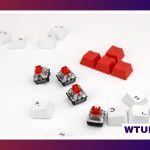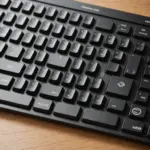
Japanese keycaps stand out for two related but different reasons: they may be designed for a Japanese Industrial Standard (JIS) keyboard layout, or they may simply feature Japanese characters such as hiragana and katakana alongside Latin legends. Understanding that distinction is essential when choosing a set. A keycap set can look Japanese-inspired while still being made for ANSI or ISO keyboards, whereas a true JIS set must match the physical arrangement and key sizes of a JIS board.
What makes Japanese keycaps different?
Some Japanese keycaps use bilingual legends, with Latin characters as the primary markings and smaller Japanese sublegends beneath or beside them. Others use Japanese characters as the main visual element, making them popular for themed builds and display keyboards. Depending on the set, the legends may include hiragana, katakana, romaji, or symbols associated with language and input controls.
Japanese keycaps are not automatically JIS-compatible. Before purchasing, determine whether the set is intended for:
- ANSI: A common layout with a wide left Shift key and a horizontal Enter key.
- ISO: A layout associated with, among others, UK keyboards, using a different Enter shape and left Shift arrangement.
- JIS: A Japanese layout that can include additional keys, different modifier sizes, and a different spacebar arrangement.
- Custom or compact layouts: Keyboards that may require special sizes or compatibility kits.
These layouts are not interchangeable simply because the switches use the same stem. The physical dimensions of each key are just as important as the switch interface.
JIS keycaps versus Japanese sublegends
A JIS keyset is made to fill the specific positions on a JIS keyboard. It may include keys that are absent from an ANSI board, along with narrower or differently shaped modifiers. A set with Japanese sublegends, by contrast, may use familiar ANSI or ISO sizing while adding Japanese characters for appearance or bilingual reference.
If your keyboard has an ANSI layout and you want Japanese lettering, look for an ANSI-compatible set with Japanese sublegends rather than assuming that any Japanese-themed set will fit. If you own a JIS keyboard, check for a complete JIS kit or a clearly listed compatibility kit. Product photographs alone are not reliable enough for confirming fit.
Materials and legend methods
The material affects both the surface feel and how the keycaps age:
- ABS: Often has a smooth finish and may develop a more polished surface with extended use.
- PBT: Generally offers a more textured feel and is commonly chosen for its resistance to surface wear.
Legend construction also matters. Dye-sublimated legends are commonly used on PBT keycaps, while double-shot construction forms the legend from a separate piece of plastic. Both approaches can produce durable markings, but the quality and legibility of small Japanese sublegends depend on the design and manufacturing process. Examine close-up images when the set relies on small characters or detailed symbols.
Profiles, switches, and typing feel
Keycap profile determines the shape and height of each row, which affects hand position, sound, and the overall feel of typing. Sculpted profiles, such as OEM or Cherry-style profiles, use different shapes across the rows. Uniform profiles, such as DSA, keep the rows more consistent and can make rearranging keys easier.
Most full-height mechanical keycaps use a cross-shaped stem compatible with Cherry MX-style switches, but this should still be confirmed in the product specifications. Low-profile switches, specialty keyboards, and nonstandard stems may require dedicated keycaps. Stabilized keys also need attention: long keys such as the spacebar, Enter, Backspace, and Shift must match the keyboard’s stabilizer spacing and size.
Choosing Japanese keycaps for your build
Use this checklist before ordering:
- Identify the keyboard layout: ANSI, ISO, JIS, or a custom arrangement.
- Measure or verify unusual keys, including the spacebar, Shift keys, Enter key, and bottom-row modifiers.
- Confirm the switch stem and whether the keycaps are intended for full-height or low-profile switches.
- Check the profile if you plan to mix Japanese keycaps with another set.
- Look for included compatibility keys or a separate JIS, ISO, or split-spacebar kit.
- Choose ABS or PBT according to your preferred surface texture and appearance.
- Inspect the legend method and close-up images if Japanese sublegends need to remain easy to read.
Uses beyond decoration
Japanese keycaps can support bilingual typing when the legends match the input methods you use, while JIS-compatible sets provide the correct physical coverage for Japanese-layout keyboards. They are also useful for builders who want a distinctive visual theme without changing switches, plates, or stabilizers. A Japanese-inspired set can be paired with linear, tactile, or clicky switches; the keycaps will influence the sound and feel, but they do not determine the switch type.
For collectors and custom-keyboard builders, limited or specialized sets may offer unusual colors, translucent elements, traditional motifs, or accent keys. For everyday use, a complete and correctly sized set is usually more important than the theme itself. Clean keycaps periodically with mild soap and water, remove them carefully, and allow them to dry fully before reinstalling them.
Final considerations
Japanese keycaps combine visual character with practical layout and legend choices, but “Japanese” can describe either the lettering or the keyboard layout. Start by checking the physical requirements of your board, then choose the material, profile, and legend style that match your typing habits. With those details confirmed, a Japanese keycap set can add bilingual information, a distinctive appearance, or accurate JIS coverage without creating compatibility problems.