The best Korean keyboard is not necessarily the largest, newest, or most heavily customized model. A better choice depends on how you type, which keys you use most often, how much desk space you have, and whether you need a physical Hangul layout or simply a convenient way to enter Korean through your computer’s input method.
Before comparing switches and keycap materials, decide which functions matter in your daily work. Number entry, programming, gaming, bilingual writing, and mobile use all place different demands on a keyboard.
Start with the Hangul layout
Most Korean keyboards use the Dubeolsik layout. It places Korean consonant and vowel Jamo on a familiar QWERTY-style arrangement and allows the operating system to combine those inputs into Hangul syllables. This is the layout most users will encounter on keyboards with Korean legends.
Sebeolsik layouts and other alternatives are also available, but they are much less common in everyday products and workplaces. If you already type with a specific Korean layout, confirm that the keyboard’s printed legends and your operating system’s input settings match your preferred arrangement.
A keyboard does not determine the language you can type. Korean input is handled by the operating system’s input method editor, while the keycaps provide visual guidance. A board with only Latin letters can still be used for Hangul, but Korean legends may be helpful if you are learning, switching between layouts, or sharing the keyboard with other users.
Choose a size that matches your workflow
Keyboard size changes the position of your hands, mouse, and frequently used keys. Consider the following layouts:
- Full-size: Includes the number pad, function row, arrow keys, and navigation cluster. It suits data entry, finance-related work, and anyone who regularly enters numbers.
- Tenkeyless (TKL): Removes the number pad while retaining the other main key groups. The narrower frame leaves more room for a mouse and can keep the shoulders in a more natural position.
- 75 percent: Keeps the function row and arrow keys in a compact arrangement. It offers many full-size functions without the width of a traditional board.
- 65 percent: Usually retains dedicated arrow keys and selected navigation keys but removes the function row and number pad. It is a practical compromise for general typing.
- 60 percent: Removes the dedicated arrow, function, and navigation sections. These keys are reached through programmable layers or modifier combinations, making this format compact but less immediate.
If your work involves frequent Korean punctuation, editing, coding, or spreadsheet use, check where Delete, Home, End, arrow keys, and function keys are located. A small keyboard can reduce desk clutter, but it may slow you down if you constantly need secondary shortcuts.
Keycaps and Hangul legends
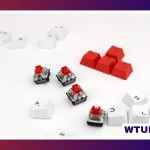
For frequent Hangul typing, keycap legends should be easy to read and durable. Korean keycap sets may print Hangul alongside Latin characters, often with the two languages arranged on different parts of each key. This makes language switching more intuitive, especially for shared or unfamiliar keyboards.
Dye-sublimated and double-shot legends are designed to resist fading better than simpler printed markings. PBT keycaps are also popular because they offer a textured surface and tend to resist the glossy wear that can develop with heavy use. These features affect feel and longevity, but they do not change how Hangul input works.
Pick switches for comfort and sound
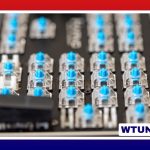
Switch choice affects the effort, feedback, travel, and noise of each keystroke:
- Linear switches provide a smooth keypress without a tactile bump.
- Tactile switches provide physical feedback during the press.
- Clicky switches add an audible click as well as tactile feedback.
- Scissor and low-profile switches offer a slimmer design and shorter travel than many standard mechanical keyboards.
There is no switch that is specifically required for Korean typing. Choose according to your preferred actuation force, typing rhythm, sound level, and working environment. A quieter switch may be more suitable for an office or shared room, while a stronger tactile response can help users who prefer clear feedback between keystrokes.
Consider ergonomics and programmable features
For long typing sessions, the keyboard’s angle, width, and hand position may matter more than its appearance. A narrower board can bring the mouse closer, while split designs, tenting, and negative-tilt supports can help some users maintain a more comfortable wrist and forearm position.
Compact keyboards often rely on layers for missing keys. Programmable firmware and remapping tools can place arrows, function keys, punctuation, or language-switch commands in more convenient locations. This is especially useful if you regularly move between Hangul and Latin text or use a 60 percent layout. Before buying, verify which remapping software or firmware the keyboard supports.
Buying and maintaining a Korean keyboard
Local Korean retailers may offer products with Hangul legends, replacement keycaps, and regionally convenient warranty service. International sellers can provide a wider selection of imported keyboards and custom parts. When ordering from abroad, check the physical standard—such as ANSI or ISO—along with the included legends, keycap compatibility, shipping arrangements, and warranty terms.
Regular cleaning helps preserve the feel and appearance of the board. Remove dust from between the keys, clean keycaps separately when appropriate, and replace worn caps or switches when needed. Enthusiasts may also modify stabilizers or lubricate switches, but basic cleaning and careful handling are sufficient for routine maintenance.
Ultimately, choose the Korean keyboard that fits your actual habits. Prioritize a familiar layout and accessible navigation keys if speed matters, select a compact format when space is limited, and treat switches and keycaps as comfort choices rather than requirements for Hangul input.